If you've never tried body butter before, you might be wondering what all the fuss is about. Isn't it just another moisturiser?
Well, not quite!
Body butter can be one of the most nourishing things you put on your skin, but there's a huge difference between a beautifully formulated, fat-rich body butter and something that's essentially an ordinary water-based moisturiser with a fancy name.
And just because something is labelled natural, organic or body butter doesn't necessarily mean it's particularly good for your skin.
So let's look at what body butter actually is, what you can use it for, what makes a good one, and why I believe the ingredients matter far more than the marketing on the front of the jar.
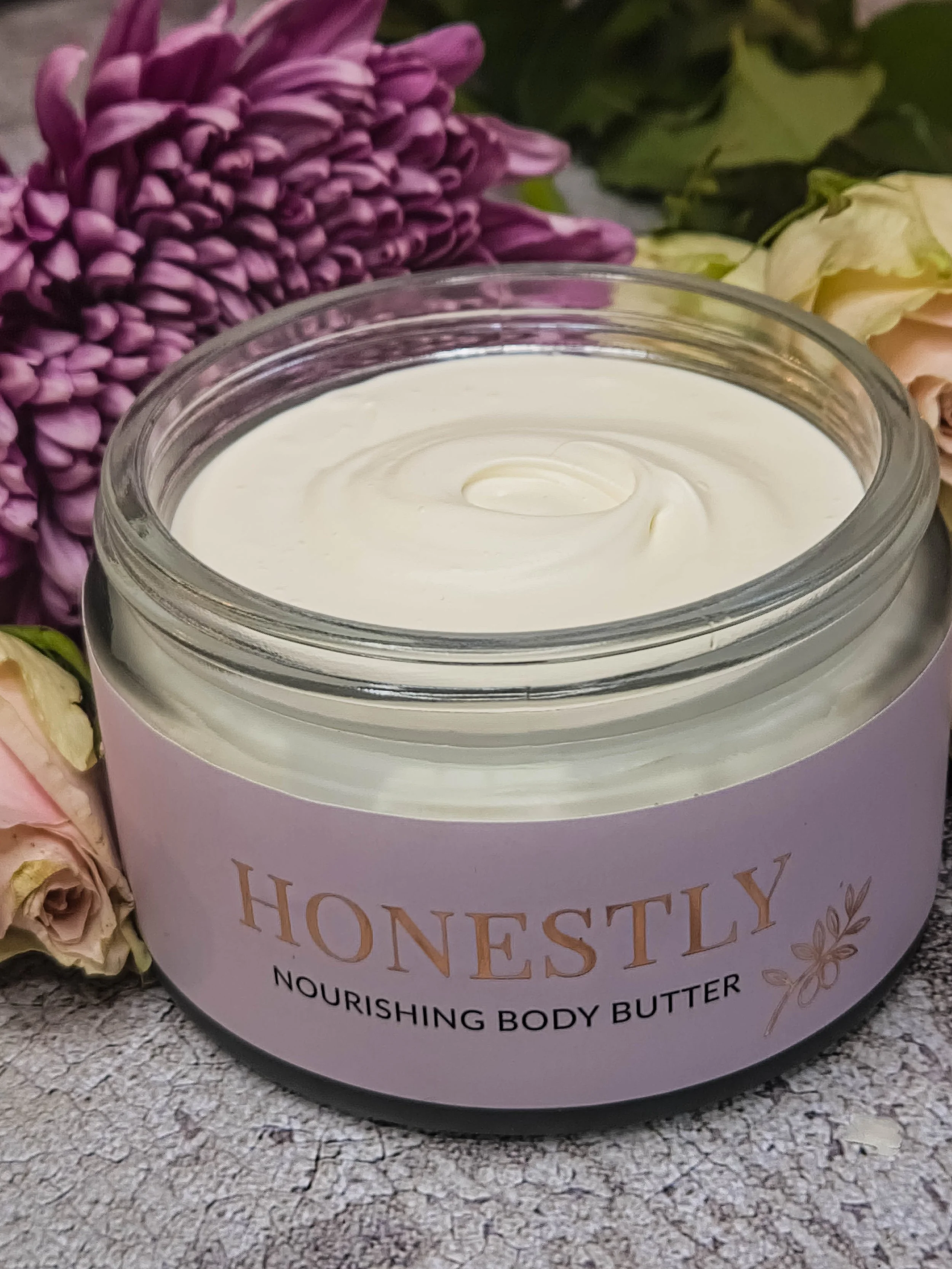
Honestly Body Butter
What Exactly Is Body Butter?
Body butter is a rich skincare product designed to soften, nourish and protect your skin.
Traditionally, body butters are made using plant-derived fats such as cocoa butter, shea butter and mango butter, sometimes blended with oils or other skin-conditioning ingredients.
Unlike many conventional body lotions, which contain a large proportion of water, an anhydrous (water-free) body butter delivers fats directly to your skin.
And that's important because your skin isn't simply a surface that needs to be kept wet.
The outermost layer of your skin, known as the stratum corneum, consists of skin cells surrounded by a complex mixture of lipids, including ceramides, cholesterol and fatty acids.
These lipids are essential for maintaining the skin barrier, preventing excessive moisture loss and protecting against environmental irritants.
When that barrier isn't functioning properly, skin can become dry, tight, flaky, uncomfortable and itchy.
A well-formulated body butter helps by softening the skin, reducing moisture loss and supporting its protective barrier.
In other words, it's about much more than making your skin feel nice for a few minutes after you've applied it.
What Can You Use Body Butter For?
This is where things get interesting, because a really good body butter can be surprisingly versatile.
1. Dry, Flaky and Rough Skin
This is probably the most obvious use.
If your skin feels dry, tight, rough or flaky, body butter can help soften it and reduce the amount of moisture escaping through the skin's surface.
It's particularly useful on areas that tend to become very dry, such as elbows, knees, shins and ankles.
And because a concentrated, water-free butter contains no added water to evaporate, a little can go a surprisingly long way.
2. Itchy and Irritated Skin
Dryness and itching often go hand in hand.
When your skin barrier is compromised, irritants can penetrate more easily and moisture escapes more readily, leaving skin feeling uncomfortable.
A good body butter can help by forming a protective layer over the skin and reducing that moisture loss.
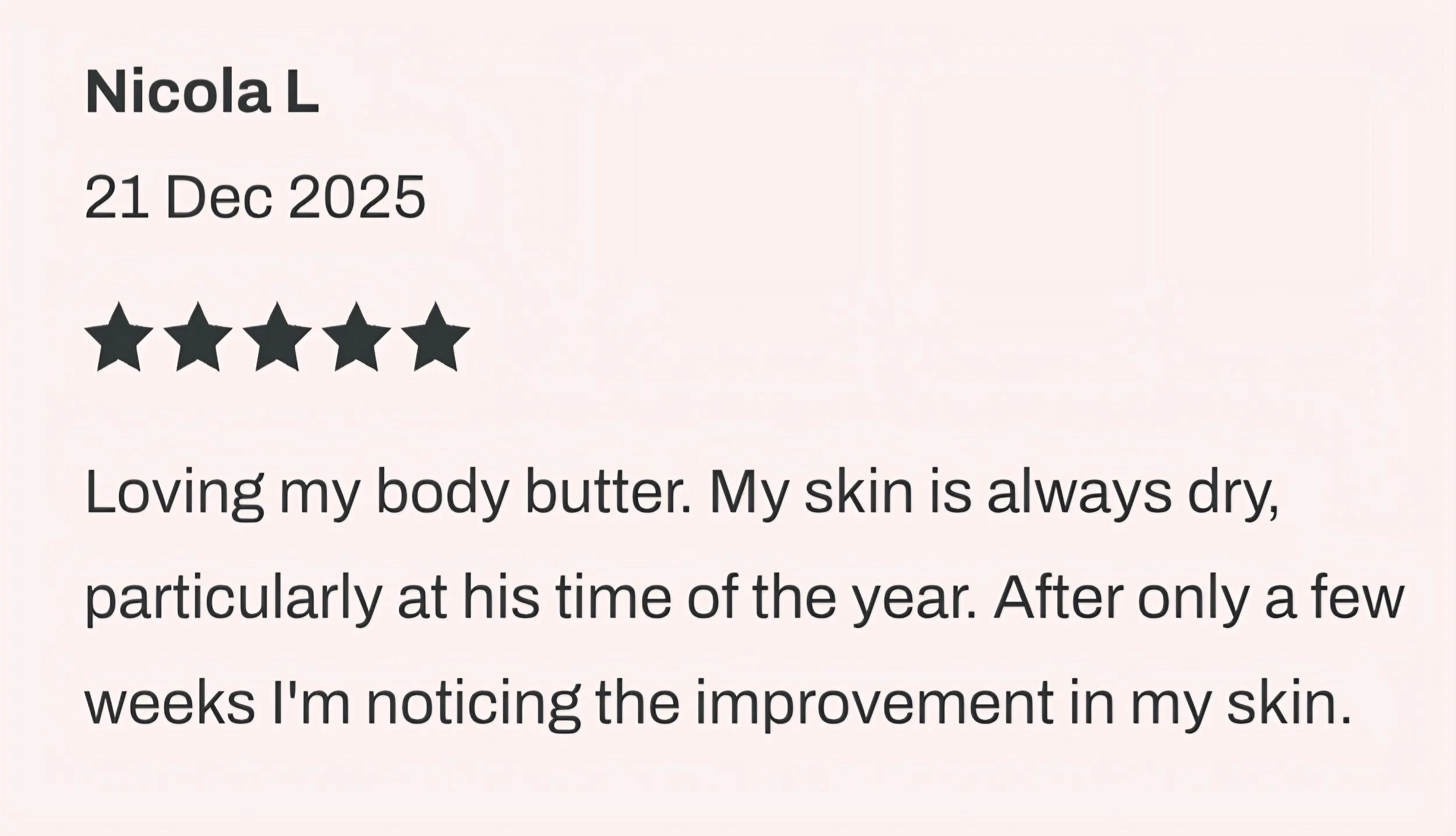
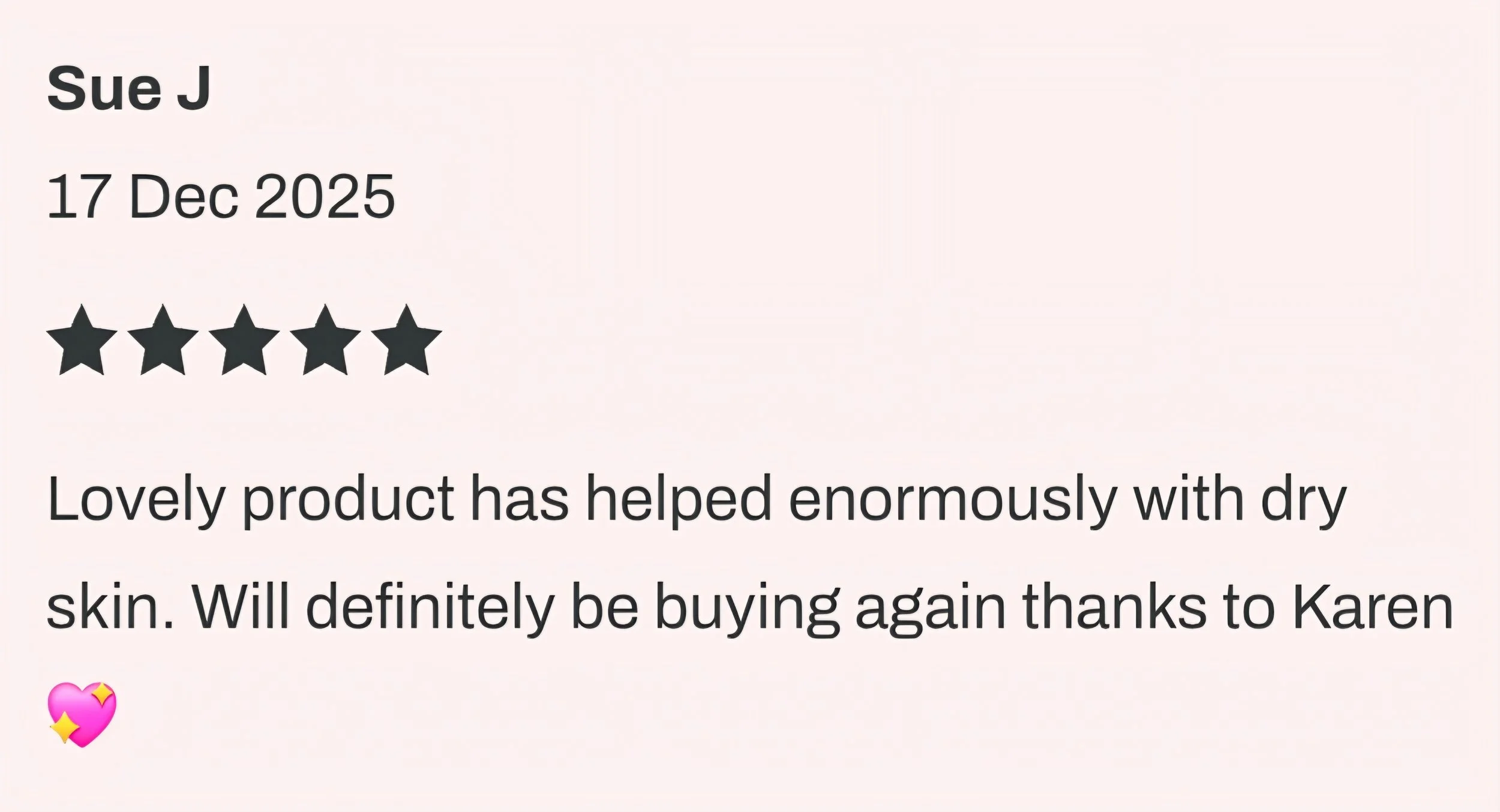
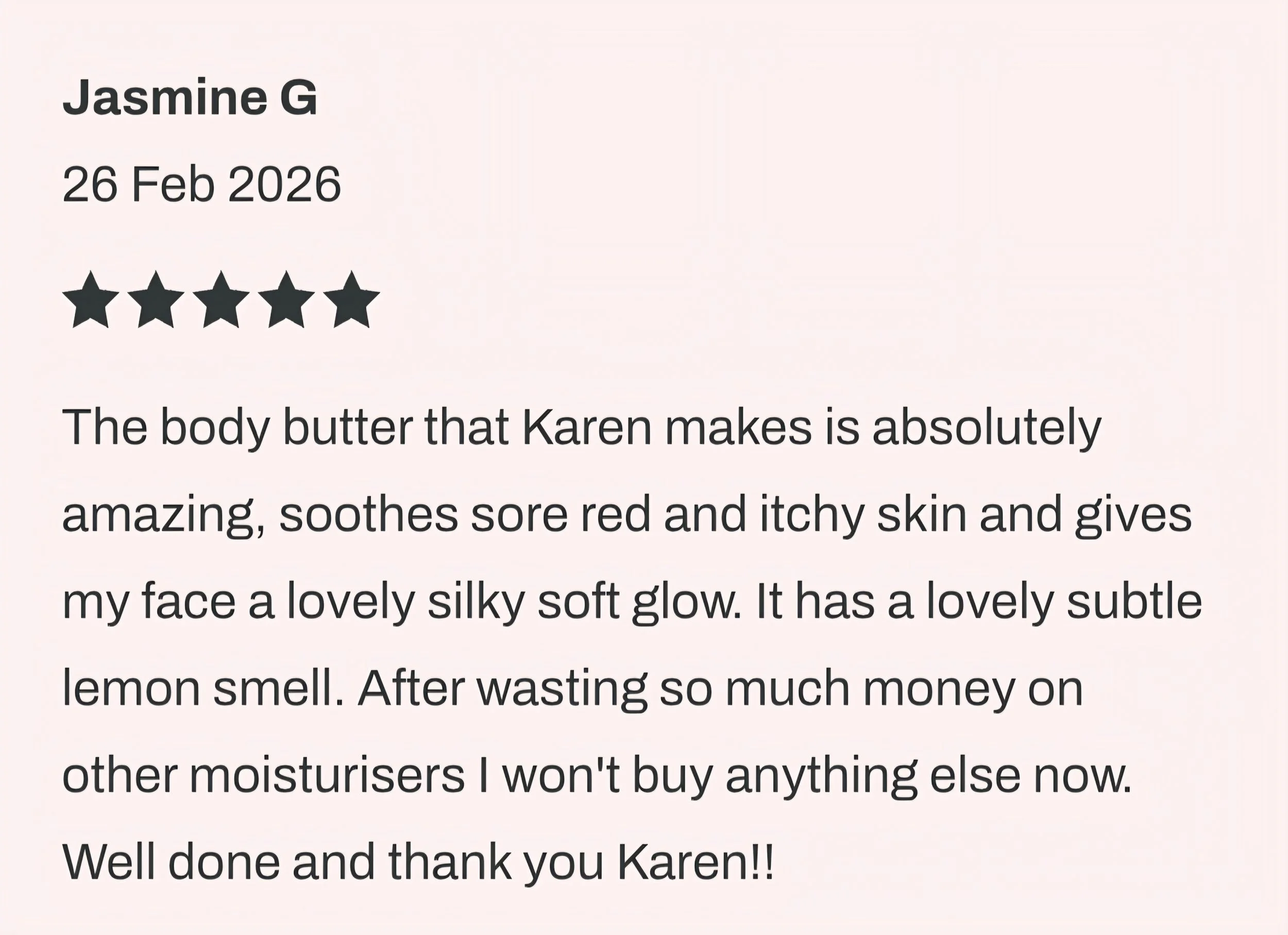
I've received some wonderful feedback from customers who have experienced relief from dry, itchy skin, sometimes remarkably quickly.
Of course, itching can have many causes, so body butter isn't a treatment for every type of itch, but for dryness-related discomfort, a rich protective moisturiser can make a real difference.
3. Eczema-Prone and Psoriasis-Prone Skin
From a metabolic perspective, healthy skin depends on healthy cellular energy production. Saturated fats are particularly interesting because of their relative stability and their role in supporting the skin's protective barrier.
When skin is inflamed, as it often is with eczema and psoriasis, a good body butter rich in saturated fats can help reduce moisture loss, soothe dryness and create a better environment for the skin's natural repair processes.
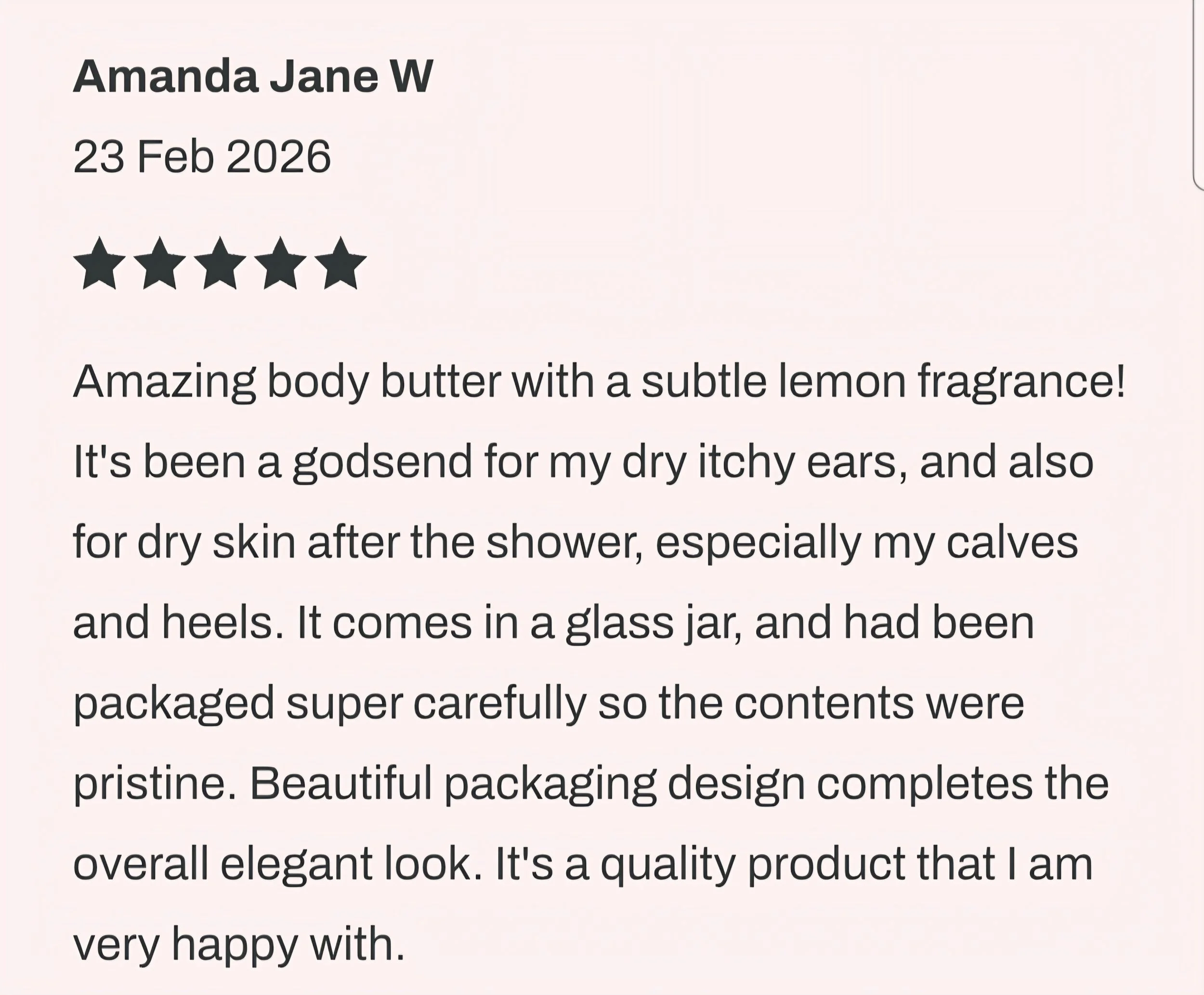
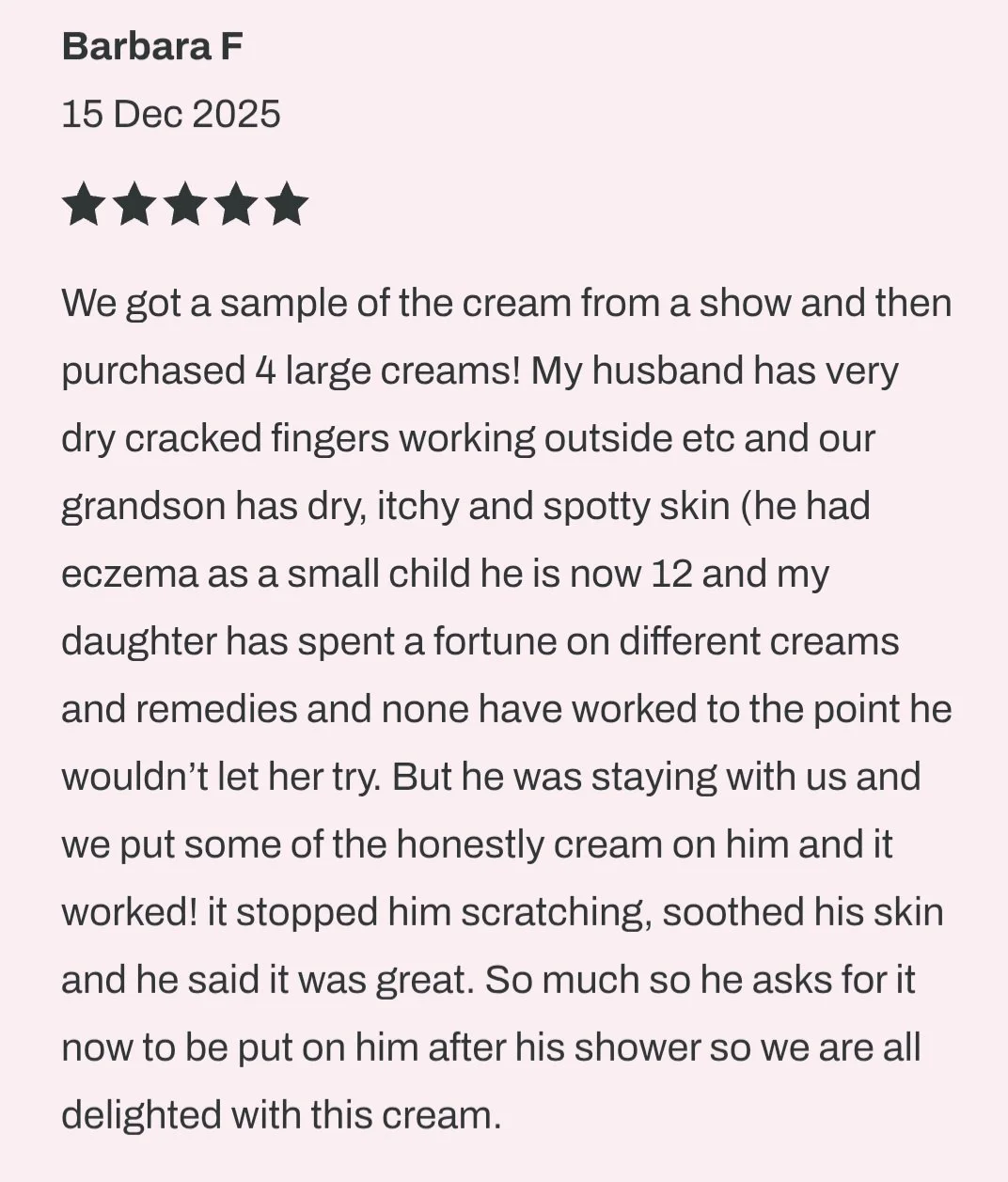
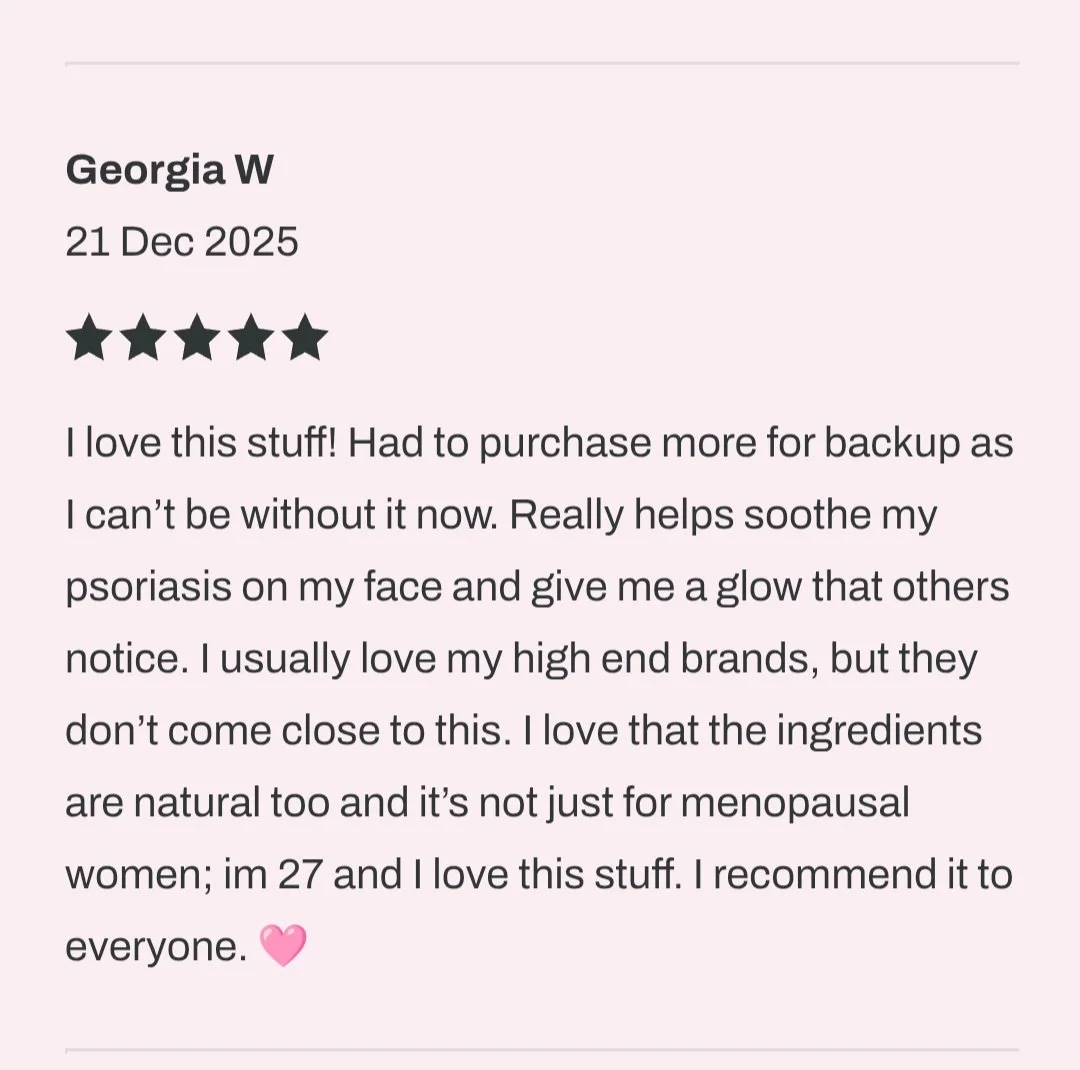
I've had some wonderful feedback from customers who've experienced improvements in eczema-prone and psoriasis-prone skin after using Honestly, including less itching, irritation and flaking.
4. Cracked Heels and Very Dry Feet
This one is particularly close to my heart because it's actually how Honestly began!
My heels used to be terribly dry and cracked, to the point where walking could become painful.
I didn’t want to buy any of the conventional moisturisers because of all the rubbish ingredients and seed oils they contain, so I started experimenting with my own combinations of fats and butters.
After 45 days (was actually less but forgot to take the photo 😂) of using my formulation, my heels had improved enormously and the painful cracks had healed.
That experience was one of the reasons I became so passionate about creating a body butter that did more than simply smell lovely.
For very dry feet, applying a generous layer before bed and putting on cotton socks can be a wonderful way to give the butter time to work.
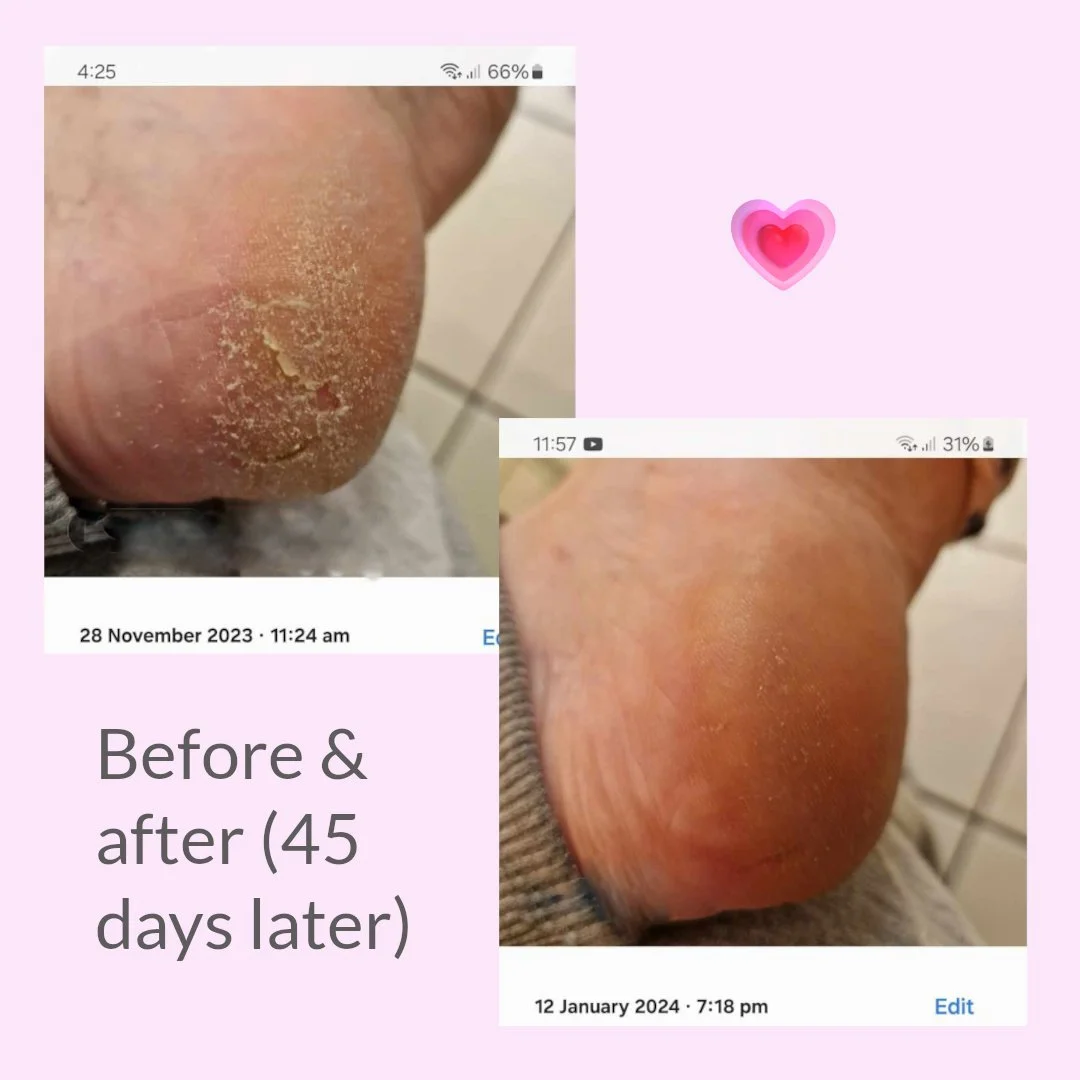
My before and after heel shots.
5. Hands, Cuticles and Nails
Our hands take an enormous amount of punishment.
Frequent washing, cleaning products, cold weather and everyday activities can leave them dry, rough and uncomfortable.
Body butter can be particularly useful after washing your hands or before bed.
Massage a small amount into your hands, paying attention to your knuckles, fingertips and cuticles.
It can help soften the skin around your nails and keep your hands feeling much more comfortable.
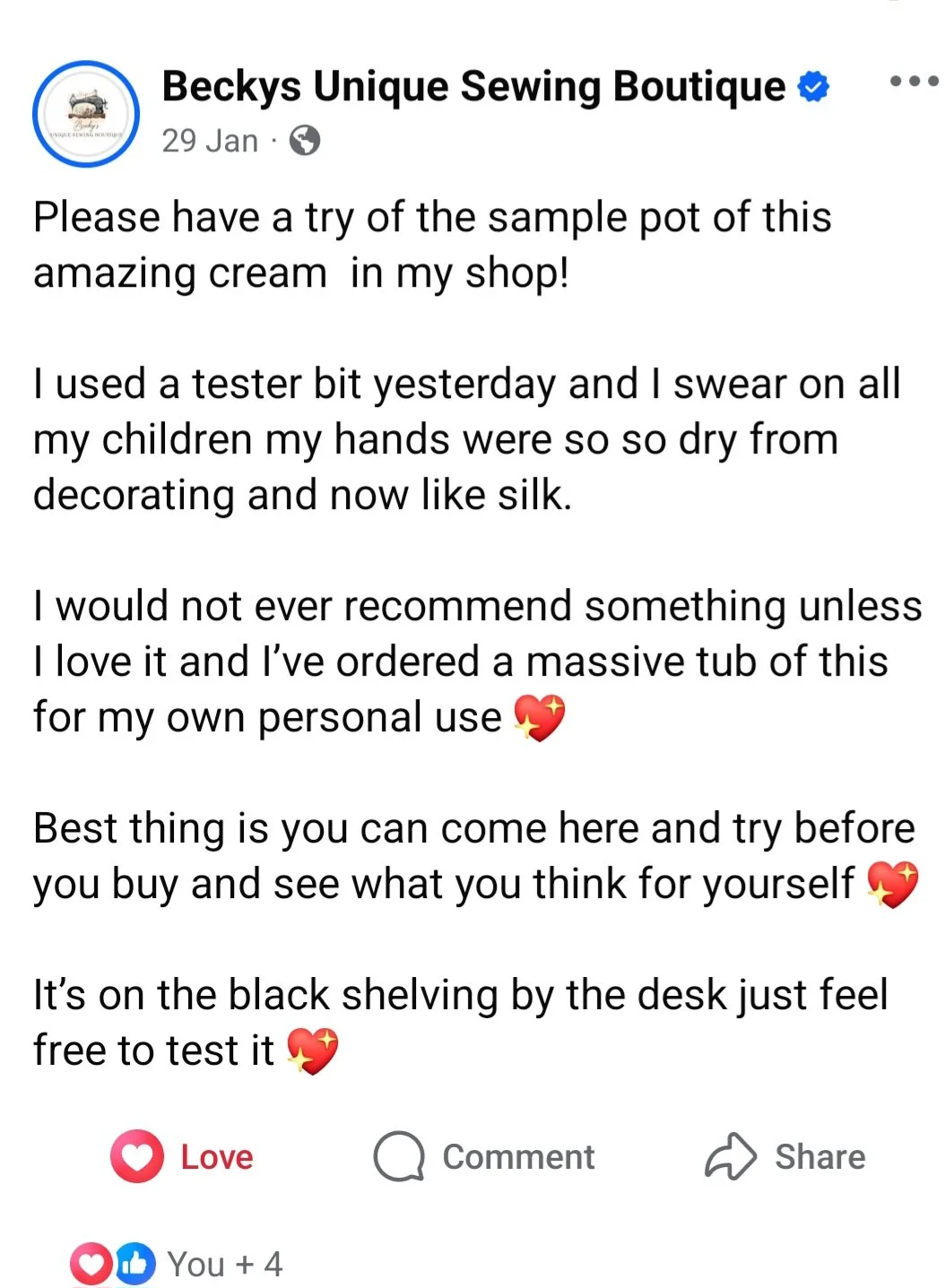
Lovely comment left by Becky (Becky’s Unique Sewing Boutique, New Ferry, Wirral), her hands were so so dry after decorating and Honestly body butter revived them 💖
6. Face and Neck
Yes, body butter can be used on the face too!
Despite the name, there's no rule that says a body butter must only be used below the neck.
A rich butter can be particularly lovely for dry facial skin, especially during colder weather or when your skin feels tight and uncomfortable.
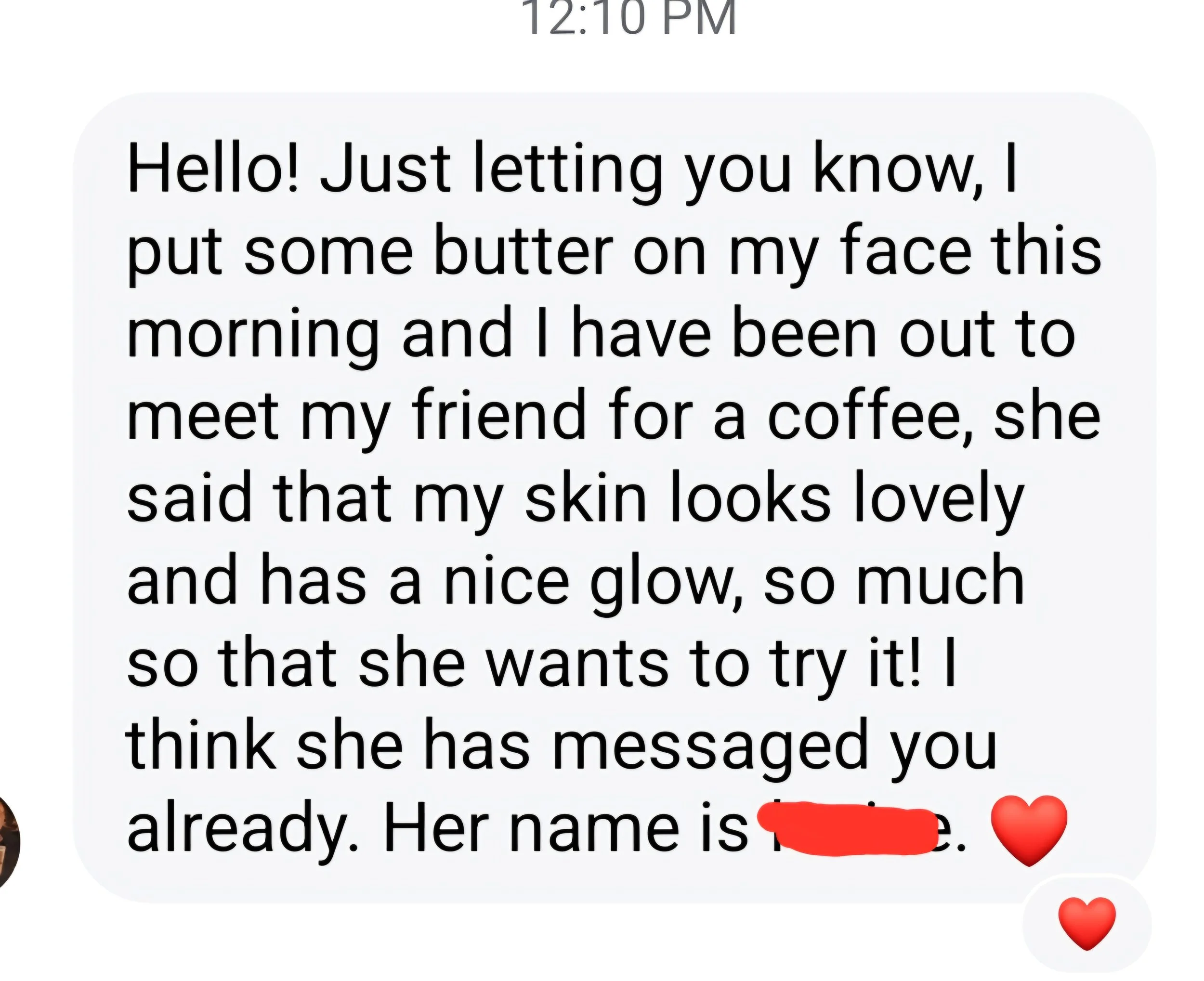
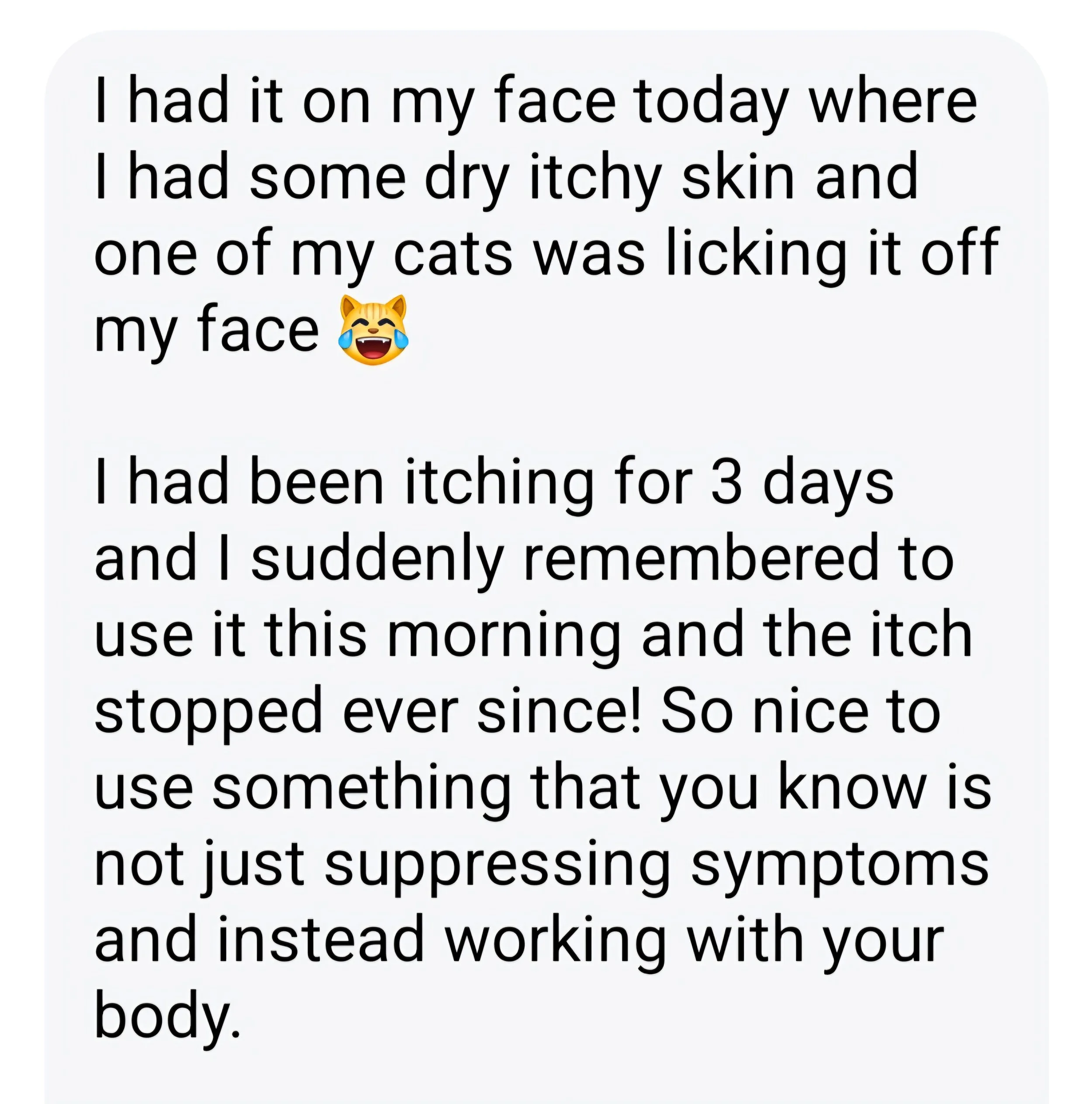
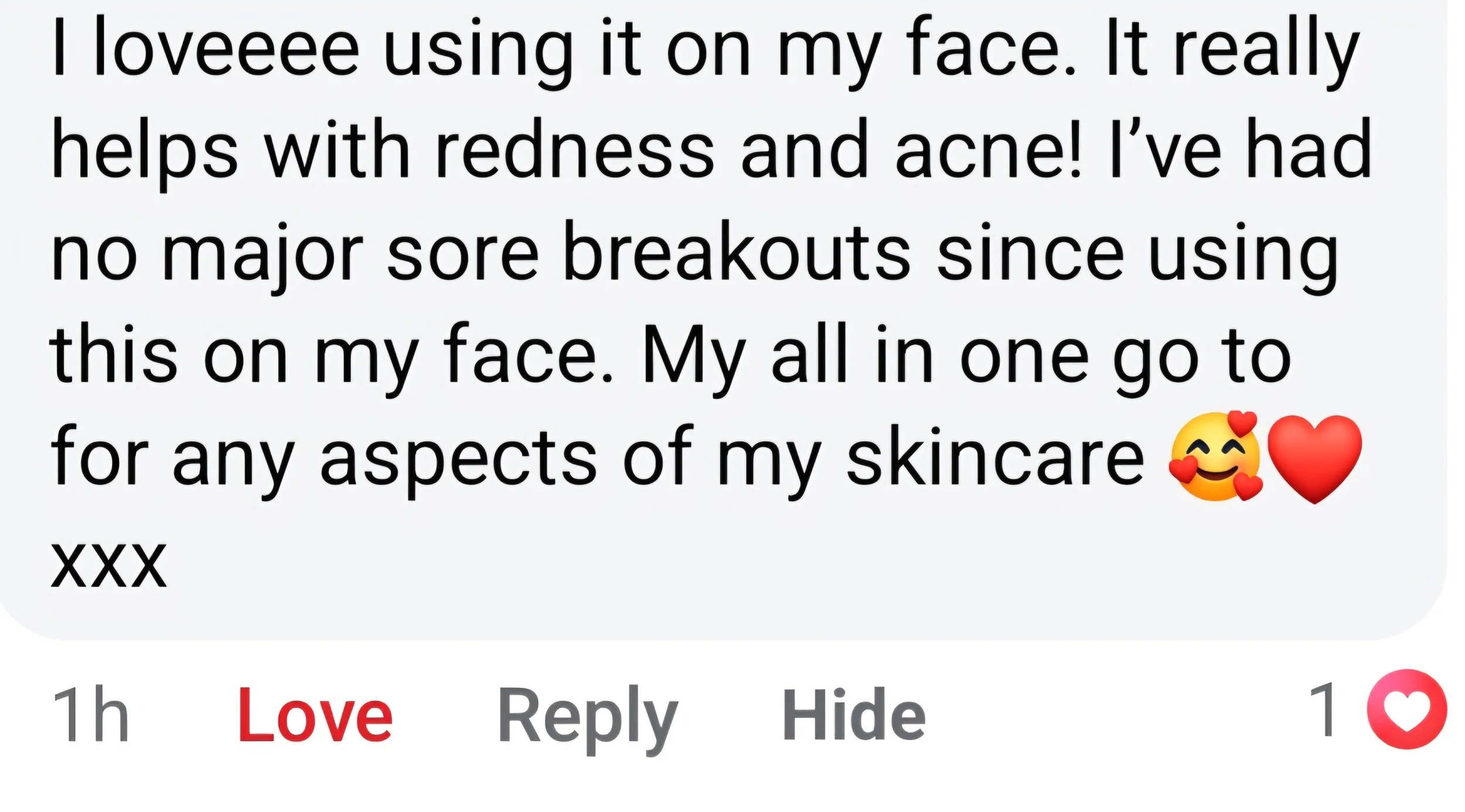
Some of my customers use it on their faces and have commented on how soft and glowing their skin looks.
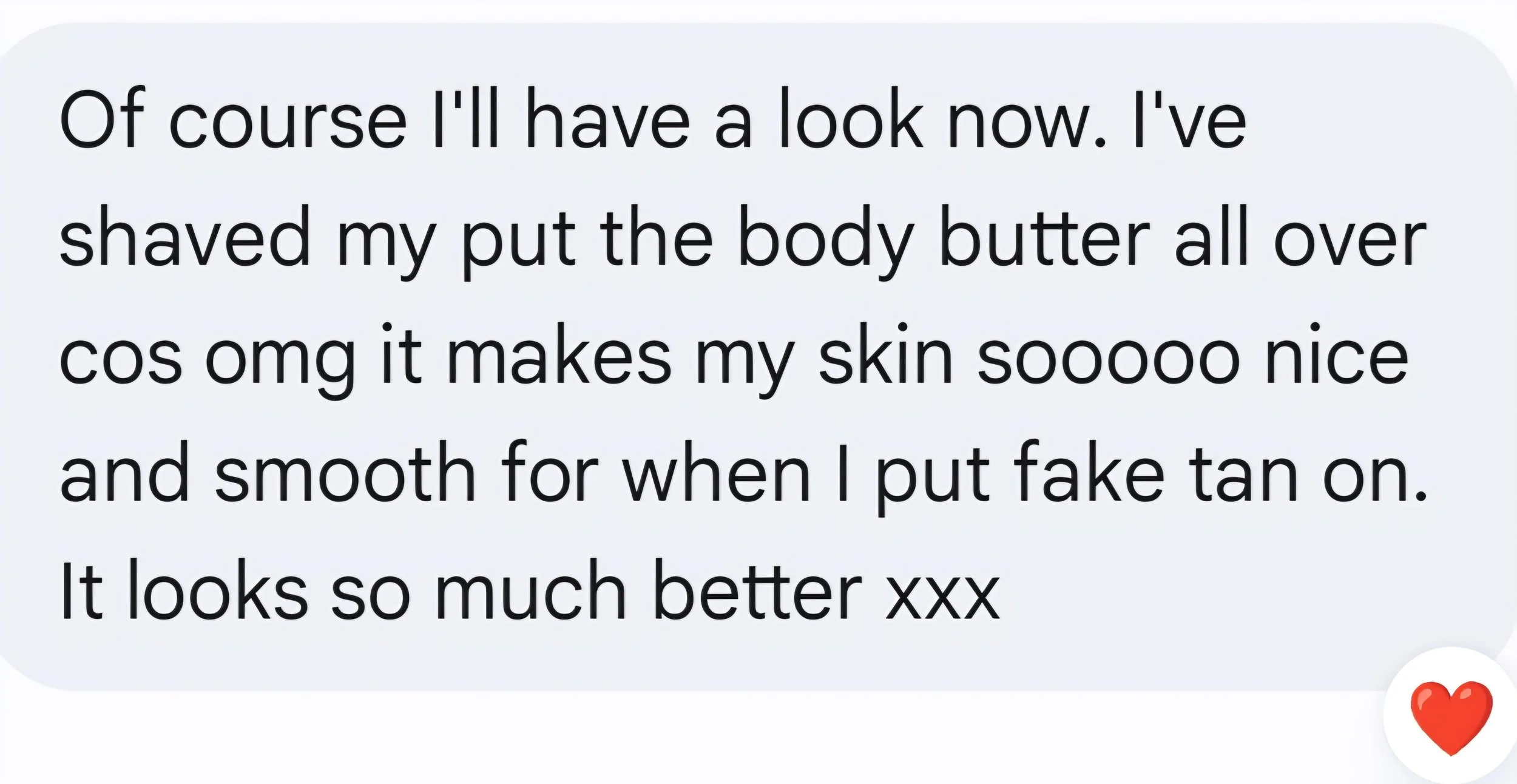
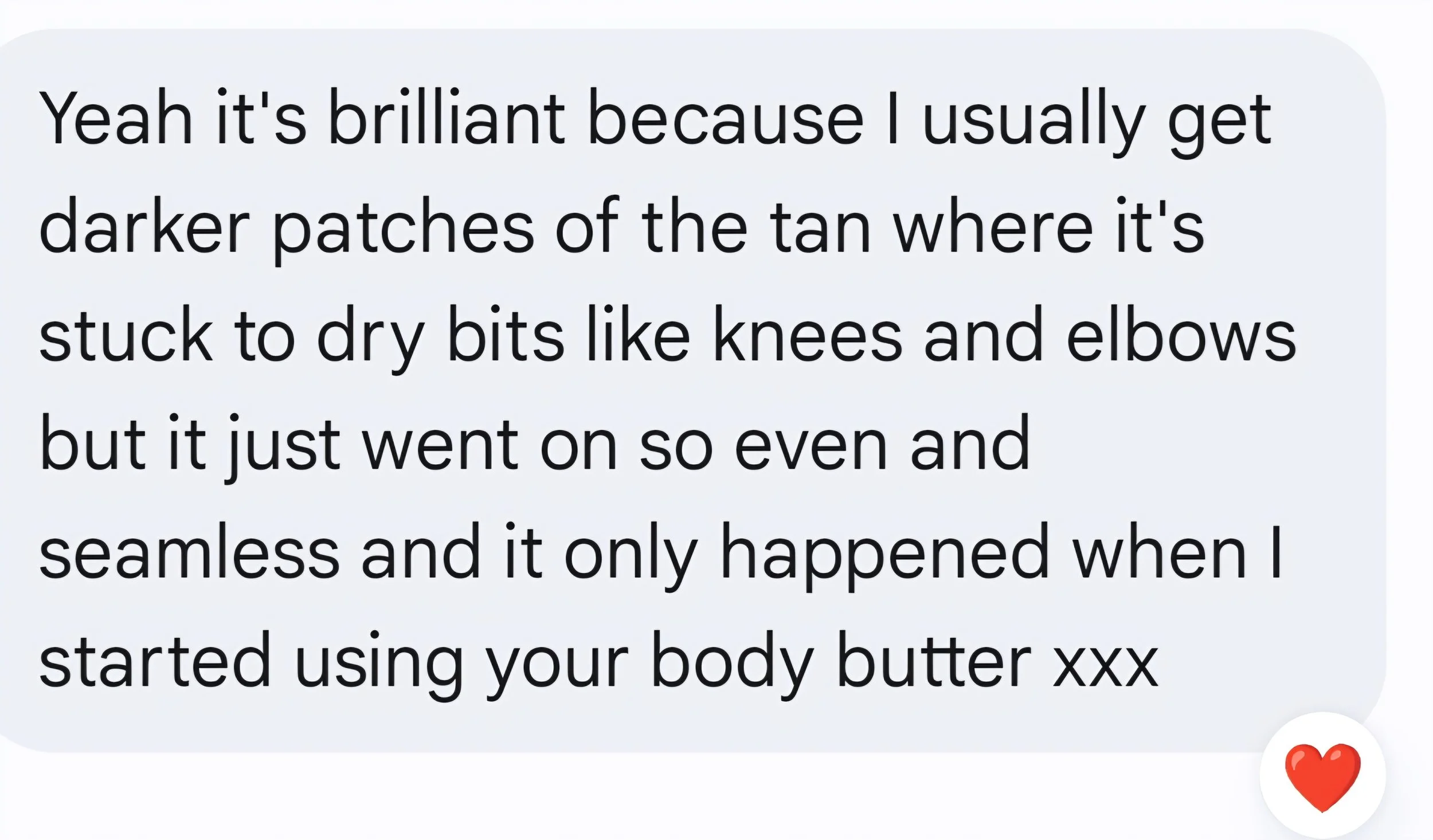
7. Preparing Your Skin for Fake Tan
This is one that people don't always think about!
Fake tan tends to cling to dry, rough patches, particularly around elbows, knees, ankles and feet.
Keeping your skin soft and well moisturised in the days leading up to applying fake tan can help create a smoother, more even-looking result.
I've recently received lovely customer feedback about how useful Honestly is for fake tan preparation.
Just remember that rich oils and butters can interfere with some tanning products if applied immediately beforehand, so follow your fake tan's instructions and allow enough time between moisturising and tanning.
8. After Showering or Bathing
One of the best times to apply body butter is after a shower or bath, when your skin is still slightly damp.
This is because body butter doesn't need to contain water to help your skin stay hydrated.
Instead, the fats help reduce the amount of water escaping from your skin.
Applying it while your skin is still a little damp can help lock in that moisture.
And if you use a rich, concentrated body butter, you might be surprised by how little you actually need.
9. Massage and a Little Everyday Luxury
Body butter isn't only for skin that's experiencing problems.
It can also be a lovely way to look after skin that's already in good condition.
Massaging it into your legs, arms, shoulders or feet can turn an ordinary skincare routine into a few minutes of relaxation.
And maintaining your skin barrier before problems develop makes just as much sense as waiting until your skin becomes dry and uncomfortable.
What Makes a Really Good Body Butter?
Now, this is the part I think is particularly important.
Because not all body butters are created equal!
A beautiful jar, a lovely fragrance and a long list of exotic-sounding ingredients don't necessarily tell you much about how well a product will work.
I think there are a few things worth looking for.
1. A High Proportion of Nourishing Fats
Your skin's protective barrier depends on lipids, so it makes sense to pay attention to the fats you're putting on it.
I particularly love cocoa butter, shea butter and mango butter because they're rich in saturated fatty acids, including stearic and palmitic acids.
These fats give the butters their rich consistency and excellent skin-softening properties.
They help create a protective layer that reduces moisture loss and leaves the skin feeling supple.
For me, these are the sorts of ingredients that deserve to be at the heart of a good body butter, rather than being included in tiny quantities simply so they can appear on the label.
2. Ingredients That Work Together
It's not simply about throwing lots of supposedly beneficial ingredients into a jar.
It's about understanding what each ingredient contributes and how the overall formulation behaves on your skin.
Some fats are firmer, others are softer.
Some provide a protective coating, while others help the product spread and absorb more comfortably.
A good formulation balances these properties so the butter is rich enough to protect your skin without being unnecessarily difficult to apply.
3. A Formulation That Supports the Skin Barrier
For me, this is the real purpose of a body butter.
Your skin is a living organ with its own protective systems.
Rather than focusing entirely on making the surface feel temporarily smooth, I think skincare should work with the way skin naturally functions.
That means helping to maintain its lipid barrier, reducing excessive moisture loss and protecting it from unnecessary irritation.
A body butter doesn't have to contain dozens of ingredients to achieve this.
Sometimes a carefully chosen handful is enough.
4. No Unnecessary Ingredients
One thing that frustrates me about modern skincare is how complicated it's become.
You'll often find products containing long lists of ingredients, many of which are there to create a particular texture, fragrance, appearance or shelf life rather than directly moisturise the skin.
Now, a long ingredient list doesn't automatically mean a product is bad, and ingredients such as preservatives are important for the safety of water-containing products.
But I personally prefer keeping things simple.
If an ingredient doesn't have a useful purpose in my formulation, why include it?
5. A Texture You'll Actually Enjoy Using
There's not much point having wonderful ingredients if a product is so hard, greasy or unpleasant that you never want to use it.
A good body butter should spread comfortably, soften with the warmth of your skin and leave it feeling nourished.
I particularly love a whipped texture because it makes a rich combination of fats feel lighter and easier to apply.
So What Makes Honestly Body Butter Different?
When I developed Honestly, I wasn't trying to create another pretty moisturiser to add to an already overcrowded skincare market.
I wanted to create something that reflected everything I'd learned about skin physiology, fats and the importance of supporting the body's natural processes.
And I wanted it to be simple.
Honestly contains just six ingredients, each chosen for a reason.
Cocoa butter
Rich in saturated fatty acids, particularly stearic and palmitic acids, cocoa butter helps soften the skin and form a protective barrier against moisture loss.
It also contains naturally occurring antioxidant compounds.
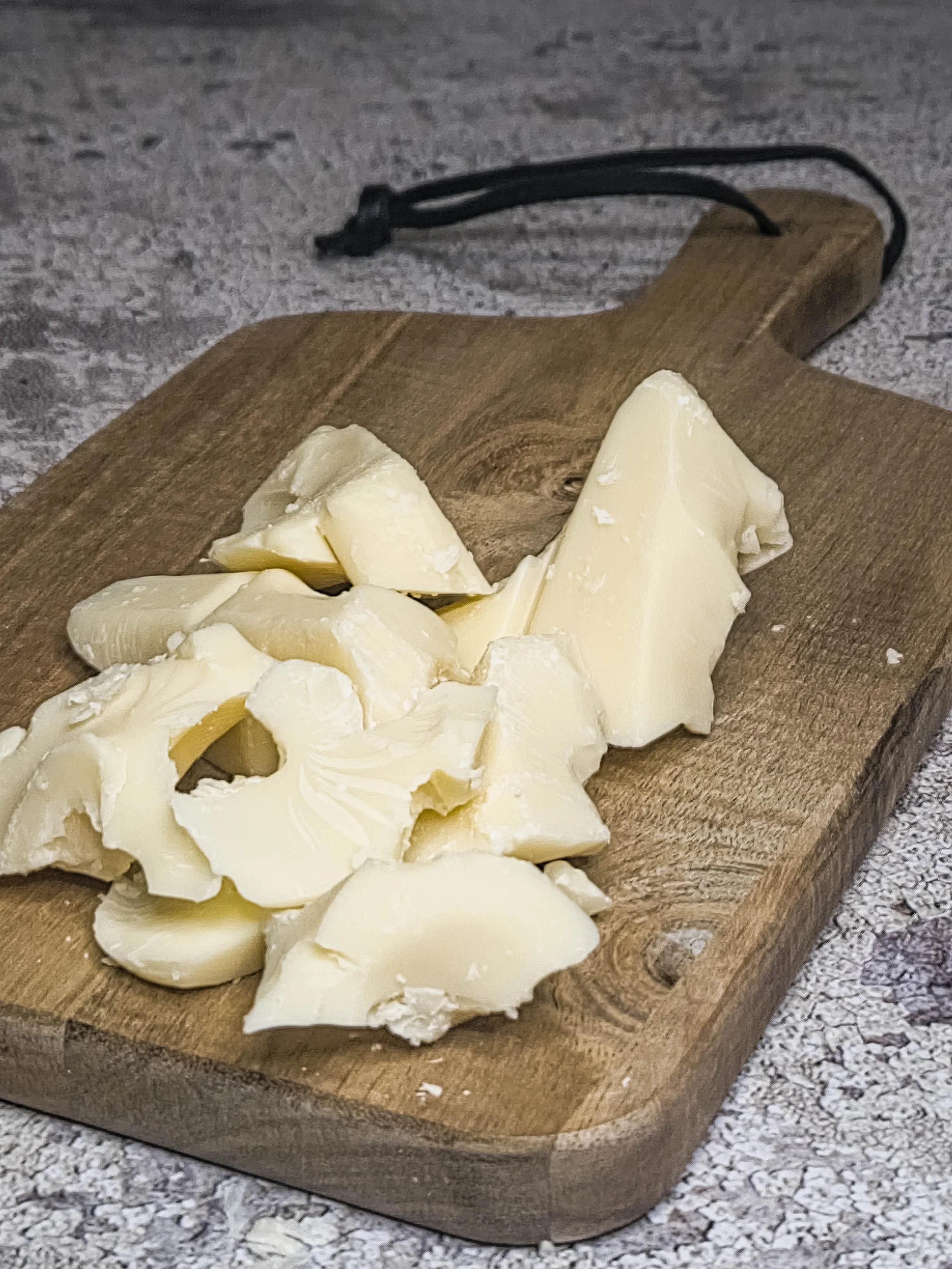
Cocoa Butter
Shea butter
Shea butter is wonderfully rich and emollient, helping to soften rough skin and improve the feeling of dryness.
Its combination of fatty acids and naturally occurring unsaponifiable compounds makes it a lovely ingredient for a protective body butter.
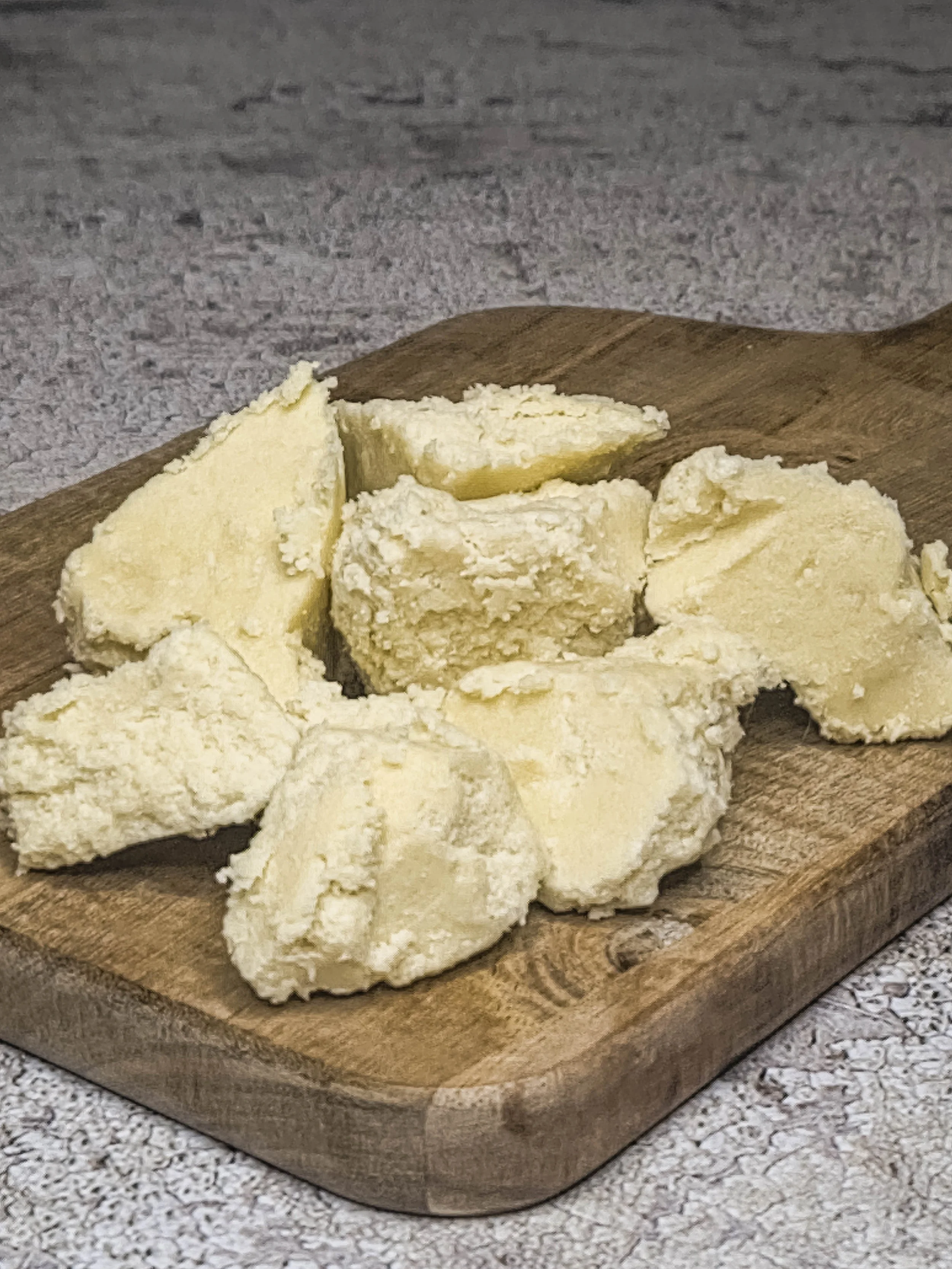
Shea Butter
Mango butter
Mango butter provides more skin-softening fats, helping give the formulation a smooth, nourishing texture.
It works beautifully alongside cocoa and shea butter.
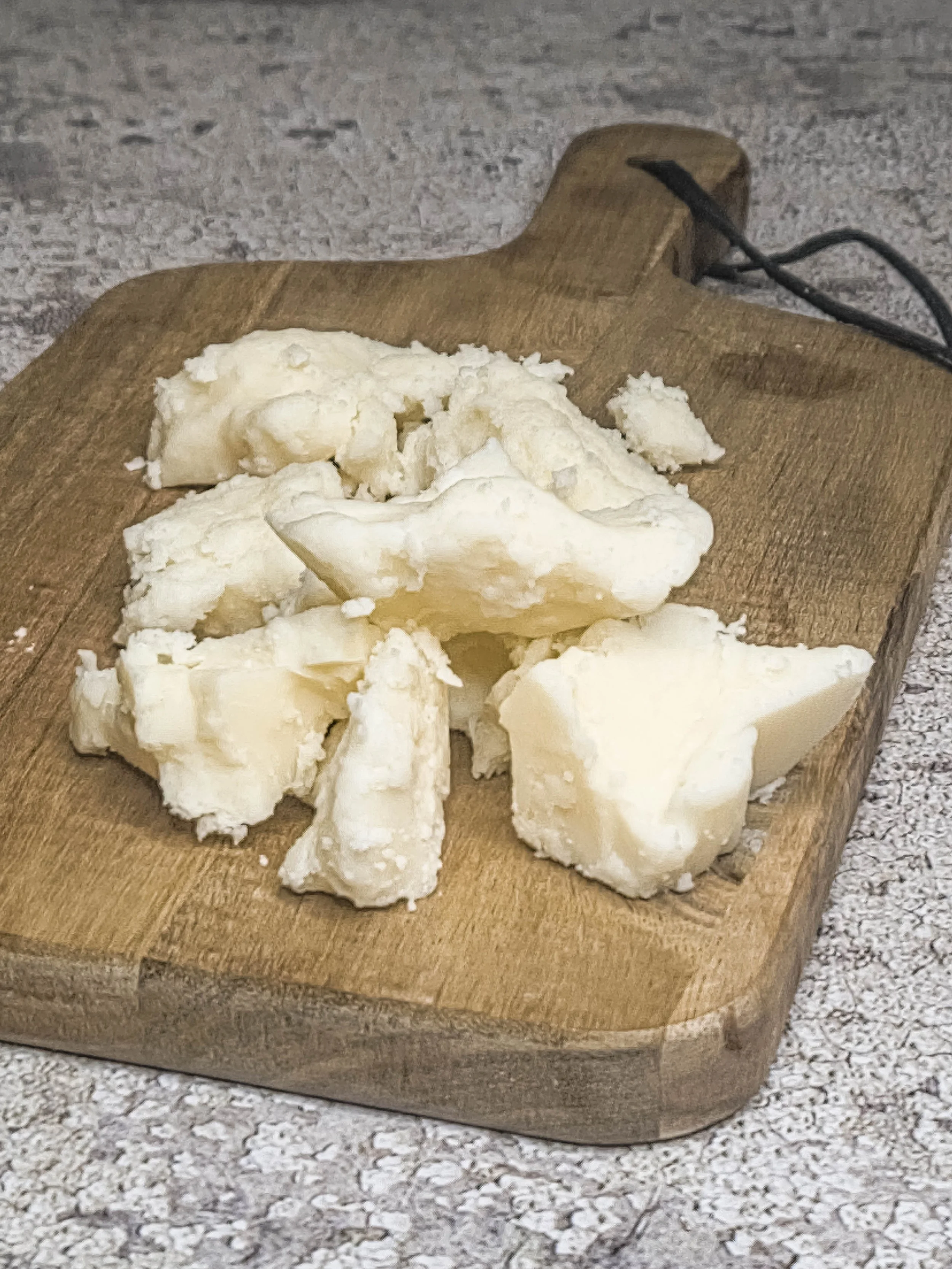
Mango Butter
Lanolin
This is one of my favourite ingredients!
Lanolin is a fascinating substance derived from sheep's wool, and it has a remarkable ability to soften and protect the skin.
It contains a complex mixture of wax esters, fatty alcohols and sterol-related compounds, including cholesterol.
I'm particularly interested in lanolin from a metabolic skincare perspective because cholesterol is an important component of healthy skin.
Lanolin's ability to reduce moisture loss is one reason it's been used in protective skincare formulations for generations.
Blending it with the other fats also helps create a more spreadable, usable product than lanolin on its own. And “if it can be dissolved (e.g. in olive oil) to the extent that it can dissolve into the skin it’s going to have an anti-ageing effect by supporting the local production of cholesterol” - Dr. Ray Peat.
Olive oil
Olive oil is rich in oleic acid and contains naturally occurring antioxidant compounds.
It helps soften the firmer butters and gives the finished product a lovely consistency.
In Honestly, it's balanced with the more saturated fats from cocoa, shea and mango butter.
Limonene
Limonene provides a light, fresh scent to the finished product.
It has anti-bacterial properties and also enhances the penetration of vitamins E, A & C into the skin (Valgimigli et al. 2012)
Why No Seed Oils?
If you've followed my work for a while, you'll know I'm particularly interested in the metabolic perspective on fats, including the work of Dr Ray Peat.
I prefer to formulate with fats that are relatively rich in saturated and monounsaturated fatty acids rather than using highly polyunsaturated seed oils (e.g. rapeseed, sunflower, grapeseed, safflower oils etc.).
Polyunsaturated fats are more susceptible to oxidation, particularly when exposed to heat, oxygen and light.
I'm incredibly proud that Honestly contains no seed oils. I believe that choosing stable, saturated fats over highly polyunsaturated seed oils is a much healthier approach to skincare, particularly because polyunsaturated fats are more vulnerable to oxidation, which can produce compounds that contribute to oxidative stress.
For me, good skincare should work with your skin's natural physiology, helping to protect and nourish it rather than exposing it to ingredients I believe are potentially harmful. It's a philosophy that's at the heart of everything I create with Honestly.
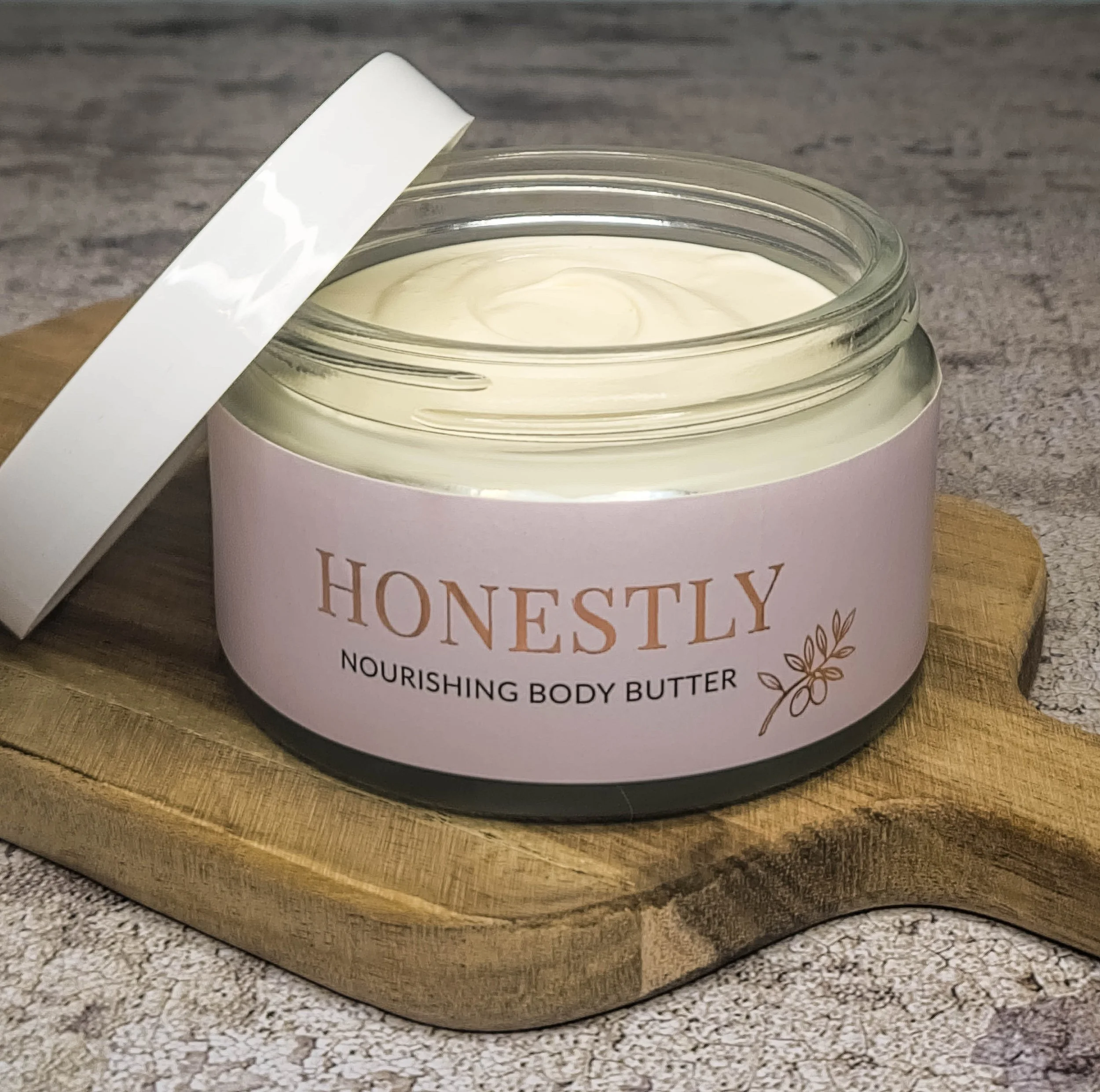
Honestly Body Butter
Is Body Butter Better Than Ordinary Moisturiser?
Not necessarily for everyone, because different skin types have different needs.
But if you're someone who struggles with very dry, rough or uncomfortable skin, a rich, water-free body butter can be a particularly useful option.
Traditional lotions often contain water, humectants and oils in an emulsion, while a water-free body butter concentrates on providing emollient and protective fats.
Both approaches can be beneficial.
The difference is that a concentrated body butter can provide a particularly rich protective layer without needing the same formulation structure as a water-based lotion.
For me, the appeal is that simplicity.
Beautiful fats, carefully combined, doing what they do best.
A Final Thought
I think we've become so accustomed to complicated skincare routines that it's easy to forget what our skin actually needs.
We're encouraged to buy one product for our face, another for our hands, something different for our feet, another for our elbows, and yet another for the rest of our body.
But sometimes one beautifully formulated product can do many of those jobs.
That's exactly what I wanted to create with Honestly.
Something simple, versatile and genuinely useful.
Something that works with the skin's natural protective barrier rather than relying on elaborate marketing claims.
And something I'd be happy to use on my own skin every day.
Because I don't believe good skincare needs to be complicated.
It just needs to be thoughtfully formulated.
Want £10 Off Your First Order?
If you'd like to give Honestly Body Butter a try, you can get £10 off your first order simply by signing up at honestly.org.uk/first. You'll also receive my FREE Gelatin Recipe Book, because great skin isn't just about what you put on it, but what you nourish it with from the inside too! Gelatin provides amino acids that help support collagen production and healthy skin. And as an added bonus, you'll receive my FREE weekly skincare guides every Friday, packed with information about skin health, metabolism and how to support your skin naturally. Because healthy skin really is an inside AND outside job! 💗