Body Temperature, Energy and Skin: Why 37°C Matters
One of the clearest signs of a healthy human metabolism is body temperature.
A well-functioning adult metabolism tends to sit close to 37°C. This isn’t arbitrary - it’s the temperature at which the human body is designed to function optimally.
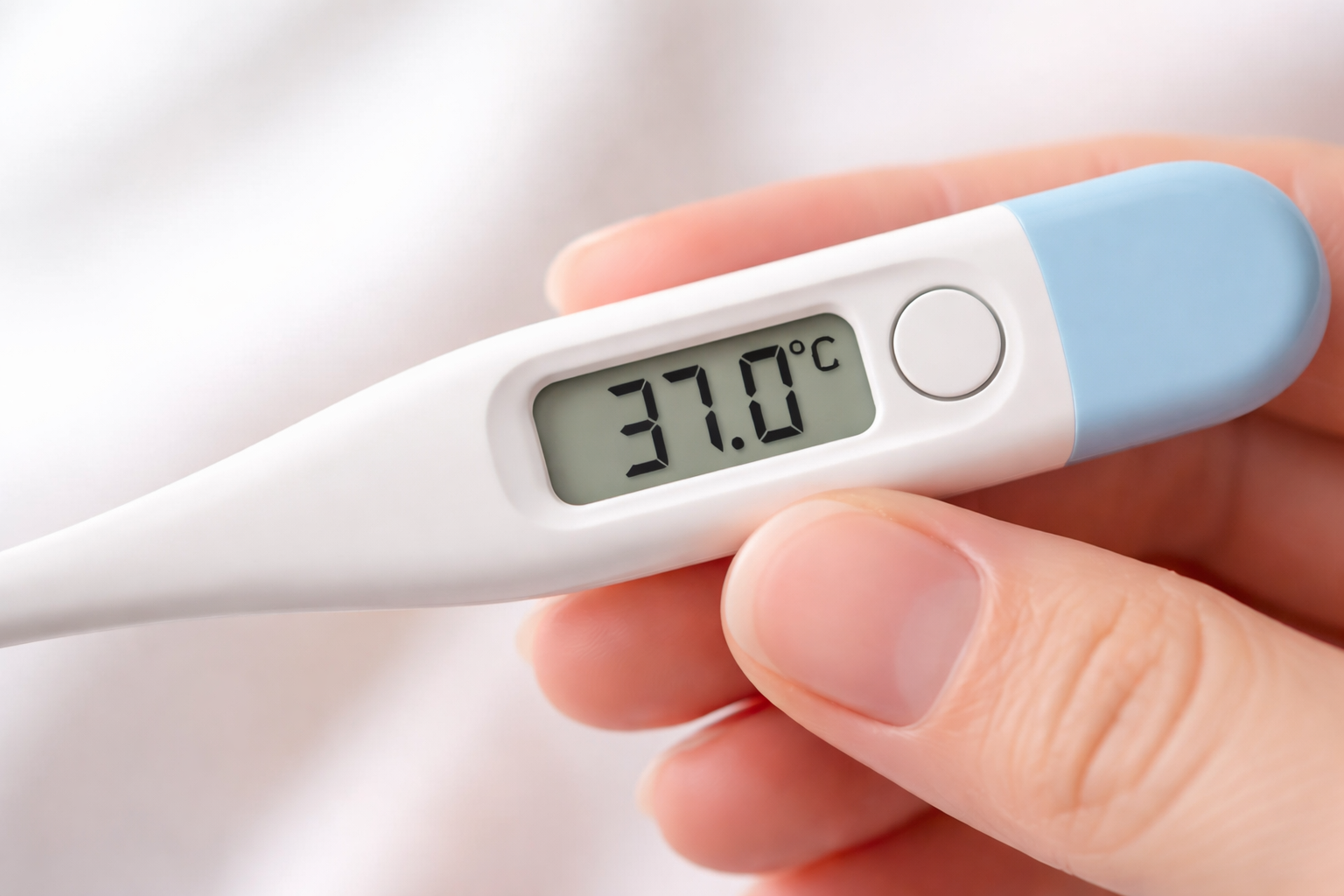
Optimum body temperature
Temperature = Metabolic Energy
Metabolism is, at its core, energy production.
The more efficiently your cells make energy, the more heat they produce as a natural by-product.
So:
Higher (normal) body temperature = higher metabolic energy
Lower body temperature = reduced energy production
This is why people with low metabolism often experience:
Cold hands and feet
Dry, slow-healing skin
Fatigue and poor resilience
Increased sensitivity and irritation
The body is conserving energy - and the skin feels it.

Cold, tired and frazzled with a low body temperature
Enzymes Work Best at 37°C
Every repair process in your skin depends on enzymes.
Enzymes are biological “workers” that:
Build collagen
Repair the skin barrier
Regulate inflammation
Support cell turnover
These enzymes are temperature-sensitive.
Human enzymes are optimised to work best at around 37°C.
When body temperature drops:
Enzymatic reactions slow
Repair processes become less efficient
Skin renewal is delayed
This is one reason why low-metabolic states often show up as dull, fragile, slow-to-recover skin.
Warmth isn’t cosmetic - it’s biochemical.
Why Saturated Fats Make Metabolic Sense for Skin
Here’s where skincare ingredients suddenly become very relevant.
Many saturated fats used in traditional skincare - such as cocoa butter - have melting points very close to human body temperature, roughly 36–37°C.
This is not a coincidence.
When you apply a saturated-fat-rich butter:
It is solid at room temperature
It melts on contact with warm skin
It spreads easily without aggressive rubbing
It integrates smoothly into the skin barrier
From a metabolic point of view, this matters because:
The skin doesn’t have to “fight” the ingredient
There’s no irritation or stress
Less energy is diverted into damage control
The ingredient behaves as if it belongs there.
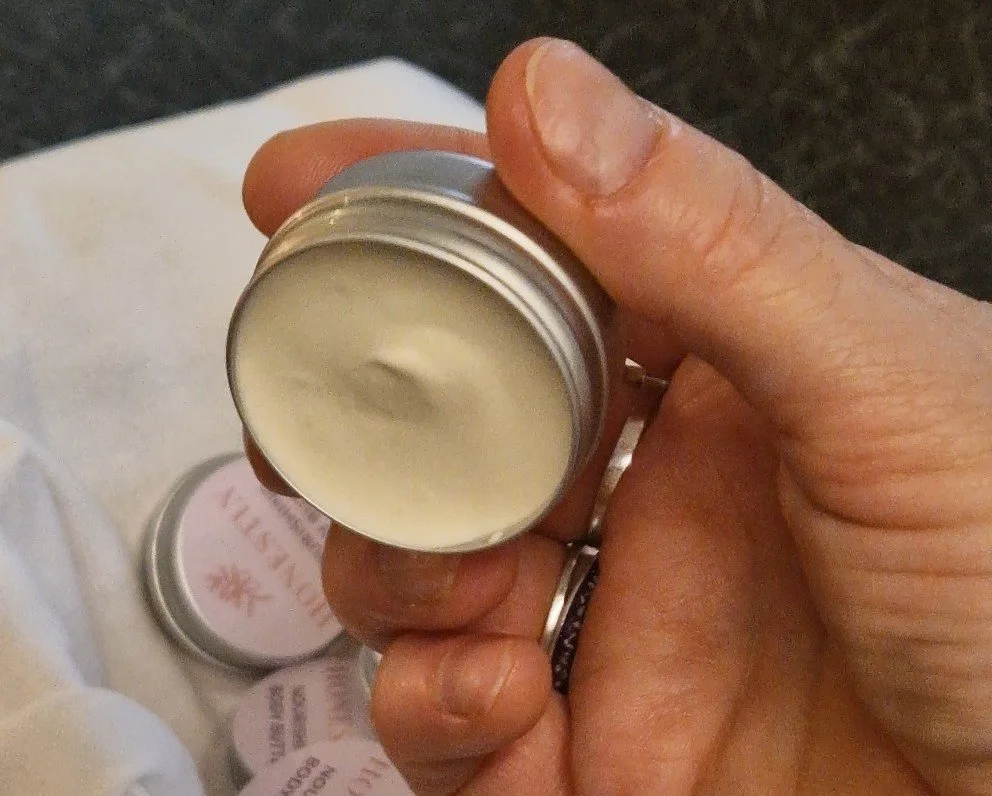
Honestly Body Butter made from saturated fats - pretty firm in cold weather
Compare This to PUFA-Rich Oils (seed oils)
Polyunsaturated fats (PUFA), commonly found in modern skincare oils (such as sunflower oil, safflower oil, grapeseed oil etc.):
Are liquid even at low temperatures
Oxidise easily when exposed to light, heat, and oxygen
Can generate inflammatory by-products
From a low-energy or menopausal skin perspective, this creates extra work:
More inflammation to manage
More repair required
More metabolic energy demanded
When energy is already limited, this can tip skin into dryness, reactivity, or chronic irritation.
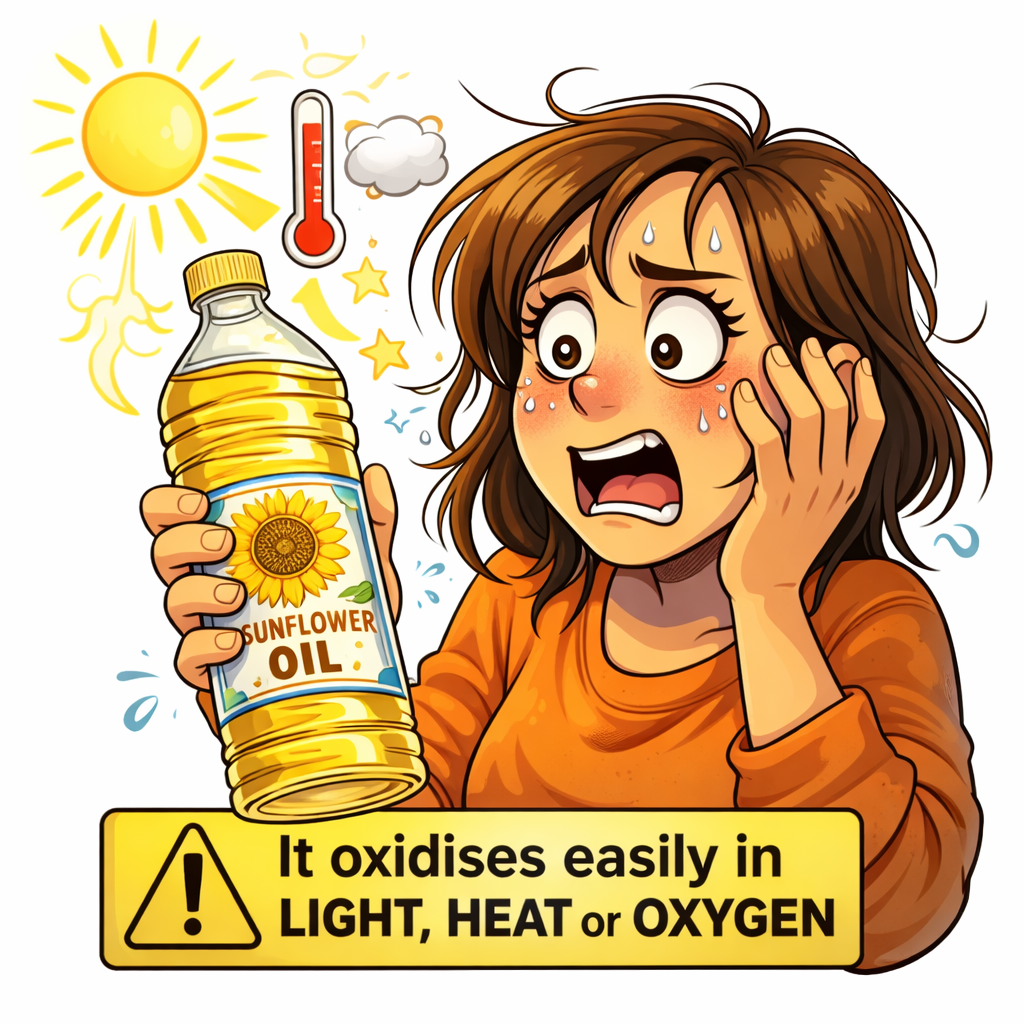
Avoid seed oils in both your food and skincare - they oxidise easily, create inflammatory by-products and lower body temperature
Metabolically Compatible Skincare
Healthy skin thrives when:
Body temperature is supported
Metabolic energy is available
Ingredients respect the skin’s biology
Using fats that melt at body temperature is a subtle but powerful signal that an ingredient is physiologically compatible.
It allows the skin to:
Stay warm
Maintain circulation
Support enzymatic repair
Preserve its barrier with minimal effort
This is especially important for menopausal skin, where energy production is often already under strain.

Body Butter melting on contact with skin
What If Body Butter Doesn’t Melt Easily on Your Skin?
If you apply my body butter and notice that it sits on the skin, feels hard to spread, or takes quite a while to melt, this can feel frustrating - and it’s often misunderstood.
Most people assume:
The product is “too thick”
The formulation is wrong
Or that they need to rub harder
But from a metabolic point of view, there may be something else going on.
Melting Is a Temperature-Dependent Process
Body butters made primarily from saturated fats (like cocoa butter) are designed to melt at around 36–37°C - roughly normal human body temperature.
If the butter isn’t melting easily, it can simply mean:
The skin surface temperature is lower than ideal
Circulation to the skin is reduced
Metabolic heat production is temporarily low
This is very common in:
Cold weather
First thing in the morning
Peri- and post-menopause
Periods of stress, fatigue, or under-fueling
It’s not a failure - it’s feedback.
Why Rubbing Harder Isn’t the Answer
When skin is cold and low in energy:
Aggressive rubbing can irritate it
Friction can raise inflammatory signals
The skin has to spend energy calming itself down
This is the opposite of what dry, sensitive, or menopausal skin needs.
A metabolically compatible butter is designed to:
Melt with warmth
Spread gently
Support the skin barrier without stress
Supporting Melt & Skin Comfort
If a butter takes time to melt, simple changes can make a big difference:
Warm a small amount between your hands first
Apply after a bath or shower when skin is warmer
Use light pressure rather than vigorous rubbing
Apply in a warm room where possible
These steps help:
Increase local circulation
Raise skin surface temperature
Allow the butter to melt as intended
Once the skin warms, the butter absorbs beautifully.
A Useful Signal, Not a Problem
From a metabolic perspective, delayed melting can actually be useful information.
It may reflect:
Reduced circulation to the skin
A need for more warmth or rest
A period where the body is conserving energy
As metabolism improves and circulation supports the skin better, many people notice:
The butter melts more quickly
Skin feels warmer to the touch
Absorption improves
Overall comfort increases
Skin That Feels Warm Is Skin That Has Energy
Healthy skin tends to feel:
Warm
Supple
Resilient
When skin is cold, it’s often asking for support, not stimulation.
Using ingredients that melt at body temperature respects this process - allowing skin to warm, relax, and repair rather than forcing it to cope.
Gentle Takeaway
If your body butter takes a while to melt:
It doesn’t mean your skin is “wrong”
It doesn’t mean the product is ineffective
It may simply be a sign that your skin needs warmth, circulation, and metabolic support - and those are things that improve over time.
Healthy metabolism
Healthy metabolism → normal body temperature → efficient enzymes → better skin repair.
And skincare that works with those principles, rather than against them, is far more likely to soothe, protect, and restore the skin long-term.

A happy & healthy 37 deg C