Red Light Therapy for Skin: How It Works & Why It’s Especially Powerful in Menopause
If you’d told me years ago that sitting quietly under a red light would become one of my most consistent skincare habits, I probably wouldn’t have believed you.
But red light therapy is one of those things that looks simple (and actually is) yet works at a very deep level in the skin and body.
Especially for menopausal skin.
This post explains how red light works, why it helps skin heal, and why it’s so supportive when hormones are changing.
What is red light therapy?
Red light therapy uses specific wavelengths of red and near-infrared light that can penetrate into the skin and underlying tissues.
Unlike UV light, red light does not damage skin.
There’s no burning, peeling or inflammation.
Instead, red light works by supporting energy production inside your cells - and that’s where the real magic happens.
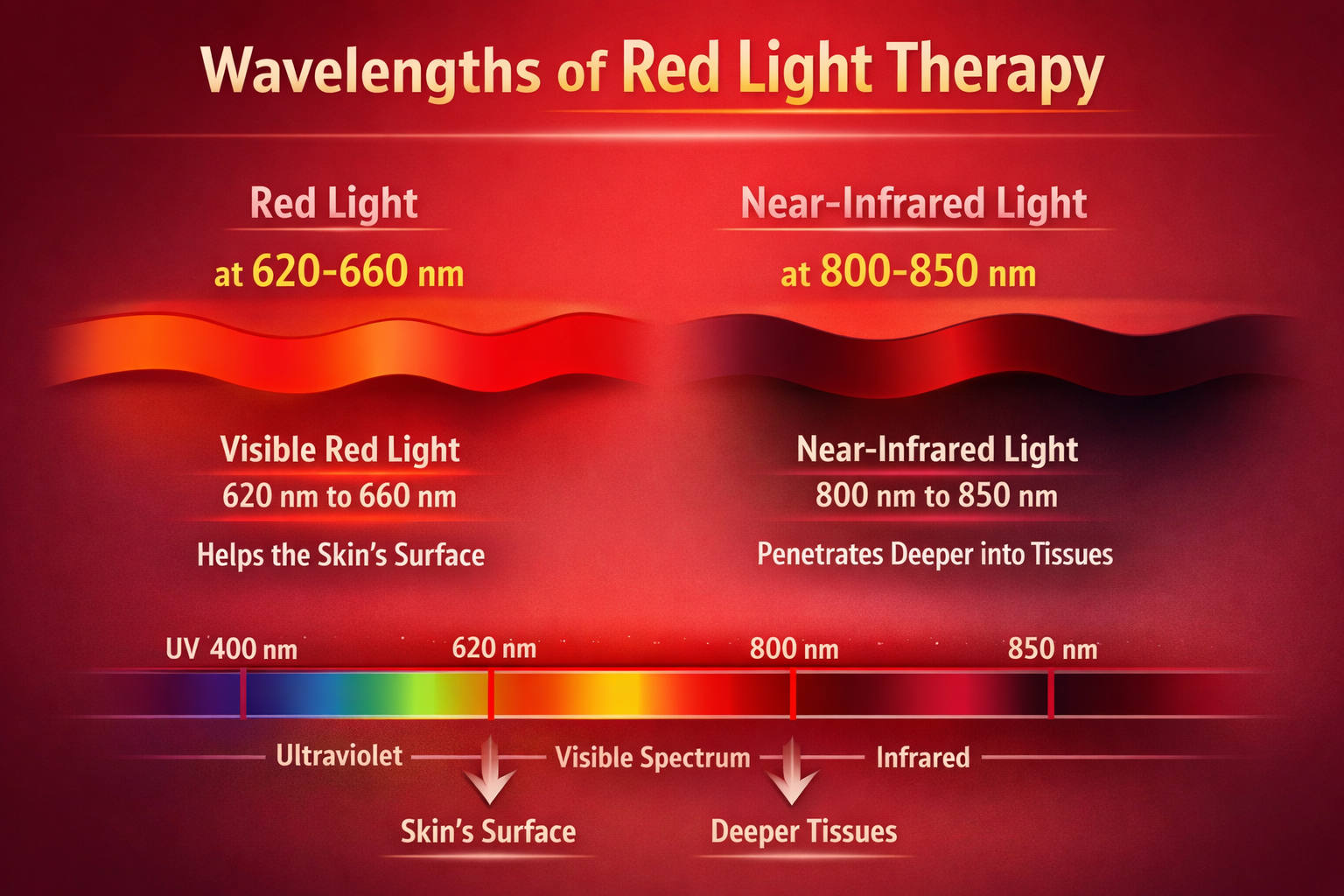
Wavelengths of red light
Skin health starts with energy
Every cell in your body (including skin cells) runs on energy.
This energy is made inside tiny structures called mitochondria.
When mitochondria are working well, cells repair, regenerate and function properly.
When energy is low, skin struggles to:
Repair itself
Maintain a strong barrier
Produce collagen
Stay hydrated and resilient
This is why low-energy skin often looks:
Dry
Thin
Crepey
Slow to heal
Easily irritated or itchy
Sound familiar in menopause? Exactly.
How red light works at a cellular level (without the jargon)
Red light helps mitochondria work better.
It does this by:
Improving oxygen use inside the cell
Helping enzymes involved in energy production work more efficiently
Increasing ATP (the cell’s usable energy currency)
More energy = better skin function.
Not by “forcing” the skin to do something - but by giving it the energy it needs to do what it already knows how to do.
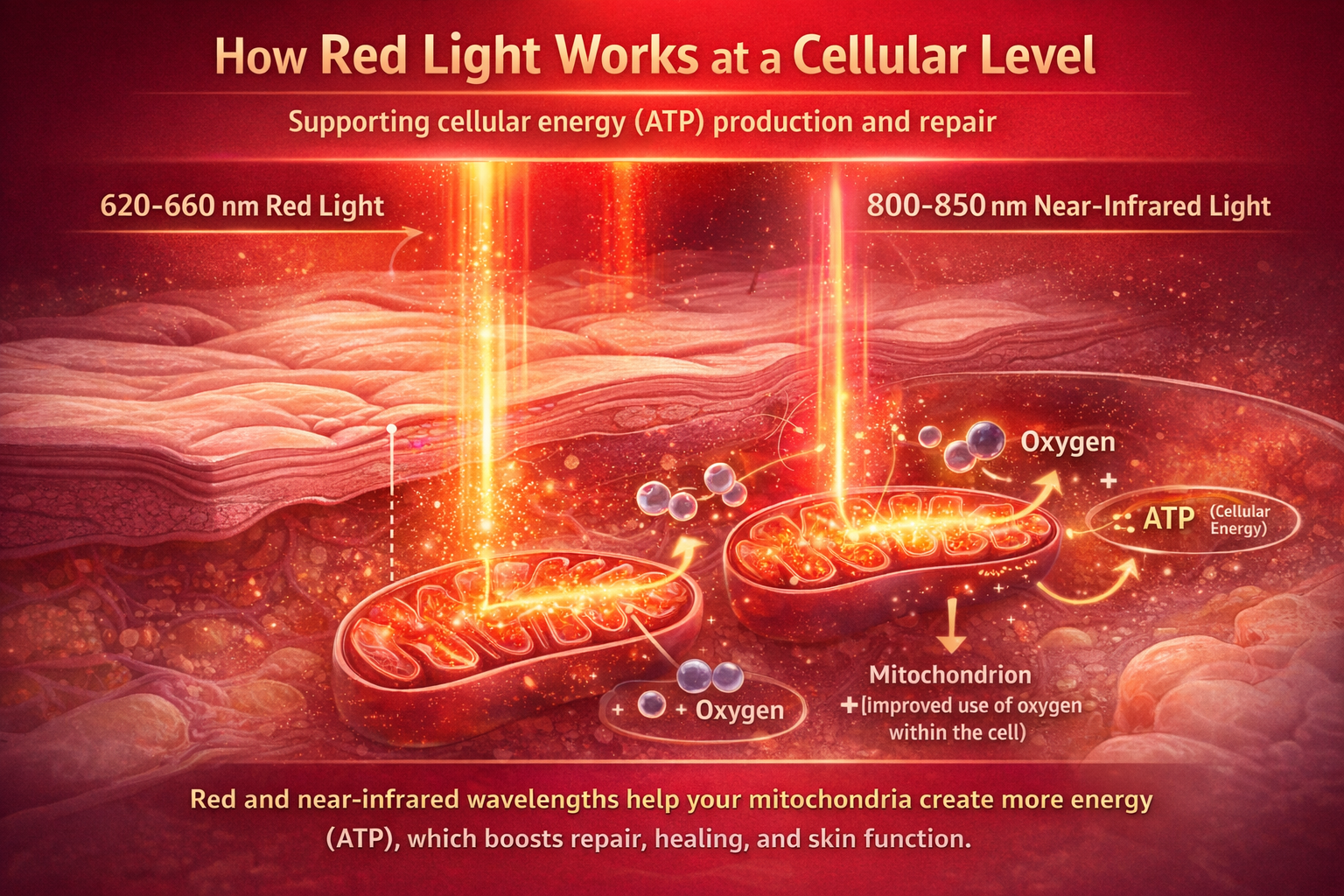
Red light at a cellular level
Why red light is so good for skin
Here’s what that increase in cellular energy means visibly:
1. Better skin repair
Skin heals faster and responds better to supportive skincare.
2. Improved barrier function
A stronger barrier means less water loss, less irritation and less sensitivity.
3. Reduced inflammation
Red light helps calm inflammatory signalling in the skin - which is key for:
Eczema-prone skin
Psoriasis-prone skin
Menopausal itch and reactivity
4. Support for collagen & skin thickness
Collagen production is energy-dependent.
Red light supports the processes that keep skin firmer and more resilient over time.
Why red light is especially helpful in menopause
Menopause isn’t just about hormones - it’s about energy.
As progesterone falls and stress hormones rise, the body shifts into a more stressed, defensive state.
This affects skin by:
Raising cortisol (which breaks down collagen)
Reducing circulation
Slowing repair
Increasing dryness and itch
Red light gently nudges the body out of stress and into repair.
It:
Supports circulation
Lowers inflammatory stress signals
Helps skin cells cope better with hormonal shifts
That’s why so many women notice their skin feels calmer rather than just “plumper”.
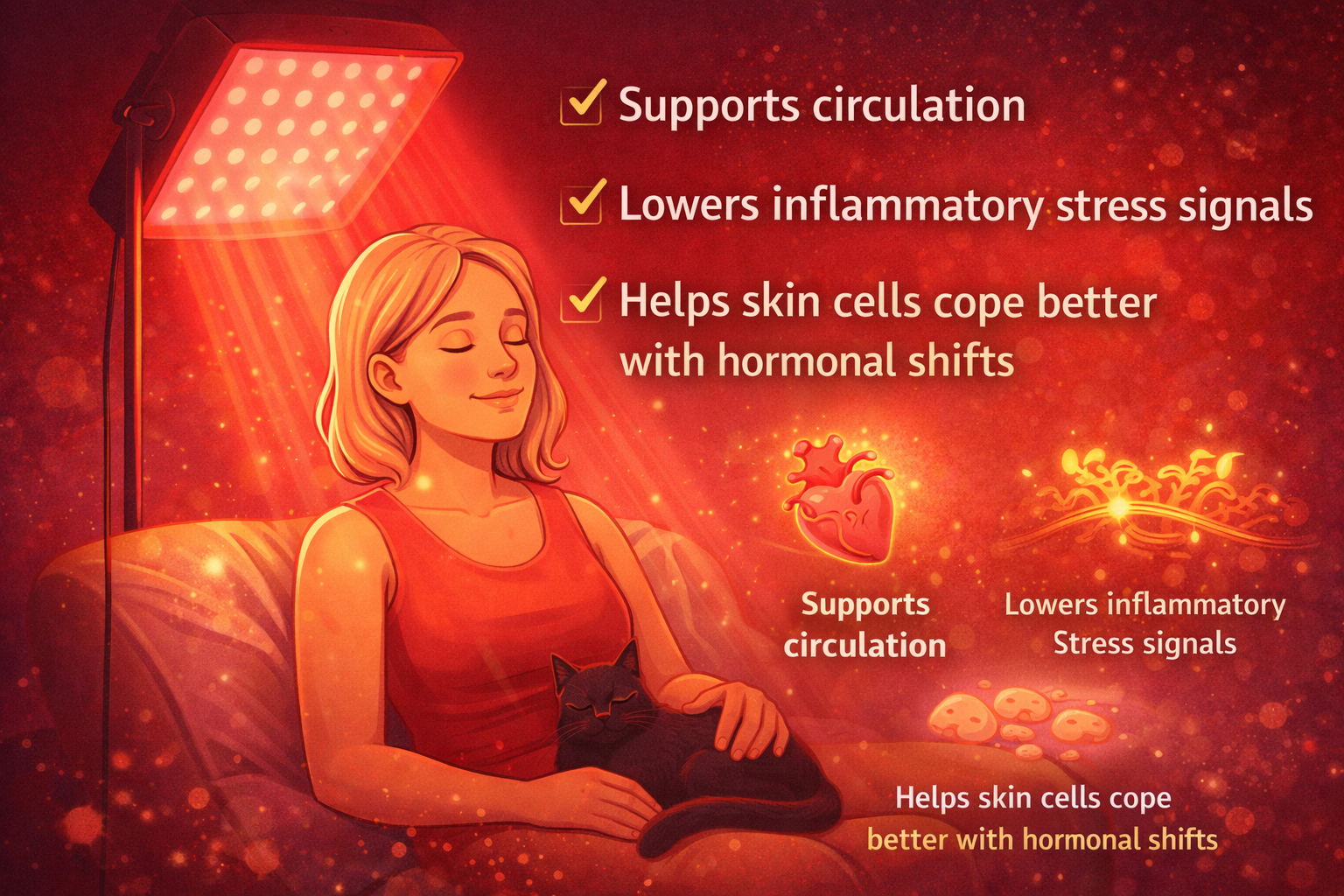
Red light benefits
Red light works best when it’s part of a bigger picture
Red light isn’t about chasing perfection.
It works best when combined with:
Enough fuel (food, not restriction)
Lower stress
Gentle, non-irritating skincare
Ingredients that are compatible with skin biology
This is why I see the best results when red light is paired with saturated-fat-rich, barrier-supportive skincare rather than harsh actives or stripping products.
How I personally use red light
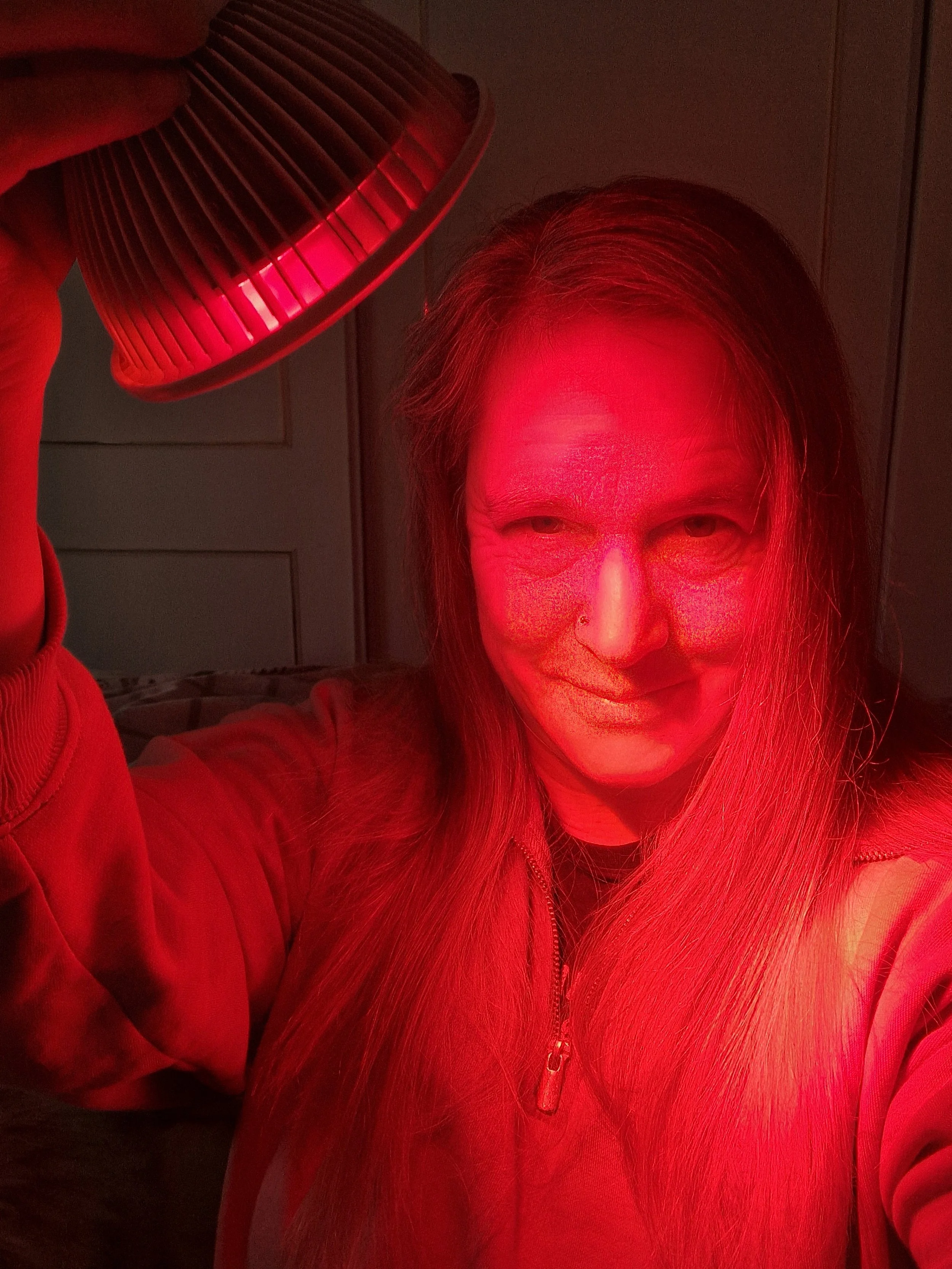
Me under my red light
I use red light most mornings for a short, calm session.
No multitasking.
No “optimising”.
Just letting my skin and nervous system settle into repair mode.
It’s become one of those habits that supports not just my skin - but my whole system.
(And yes… my cat regularly joins me 🐈⬛)
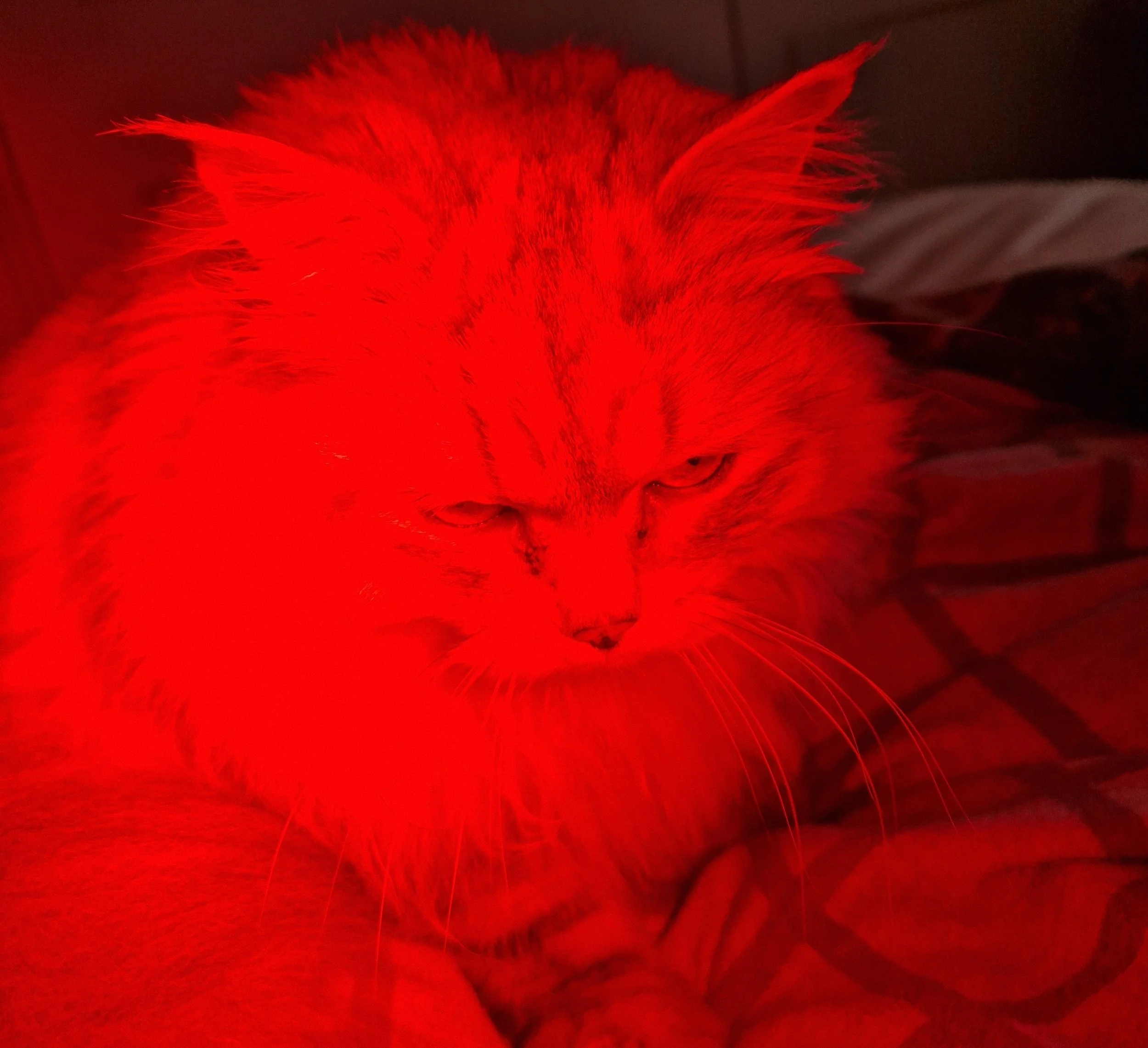
Blesk enjoying the red light.
Final thoughts
Red light therapy works because it respects how the body heals.
It doesn’t strip, irritate or override natural processes.
It supports them.
For menopausal skin - which often needs more energy, not more aggression - that makes all the difference.
If you’re struggling with dryness, thinning, itchiness or skin that just doesn’t bounce back like it used to, red light is one of the gentlest and most powerful tools you can add.